Ever wonder what truly keeps those massive metal birds gracefully soaring through the sky, making even the bumpiest turbulence feel like a minor hiccup?
It’s not just the pilots at the helm; it’s a breathtaking dance of incredibly sophisticated technology happening behind the scenes. We’re talking about flight control algorithms – the unsung heroes that are essentially the brains and nervous system of every aircraft, from tiny drones to colossal airliners.
I’ve been fascinated by how these digital marvels have evolved, constantly pushing the boundaries of what’s possible in aviation. It’s genuinely mind-boggling when you think about it.
Every time you step onto a plane, you’re trusting countless lines of code to maintain stability, execute precise maneuvers, and even predict potential issues long before a human could react.
I’ve personally used and observed these systems in action, and the level of precision they offer is truly a testament to human ingenuity, constantly balancing complex physics with real-time data.
This isn’t just about making planes fly; it’s about making them fly smarter, safer, and with an efficiency we could only dream of a few decades ago. From the early days of mechanical linkages to today’s fully digital “Fly-By-Wire” systems, the journey has been nothing short of revolutionary.
Now, with AI and machine learning stepping into the cockpit (metaphorically speaking!), these algorithms are becoming even more adaptive, capable of handling unexpected environmental shifts like severe wind gusts or changes in payload.
They are the silent partners making split-second decisions to optimize flight paths, predict maintenance needs, and seamlessly integrate with evolving air traffic management systems.
What excites me most is the future they promise: a world of advanced air mobility, autonomous urban transport, and perhaps even quantum computing-powered flight that redefines travel as we know it.
Of course, it’s not without its challenges—from ensuring ironclad cybersecurity to navigating complex regulatory landscapes and building public trust in pilotless aircraft.
But my take is, these aren’t roadblocks, they’re exciting new frontiers for innovation, paving the way for a future where flying is even more reliable and accessible.
So, how exactly do these intricate algorithms orchestrate such aerial ballet? What are the latest breakthroughs making them smarter than ever, and where are we headed next in the thrilling world of autonomous flight?
Let’s find out!
From Cables to Code: The Digital Revolution in Our Skies
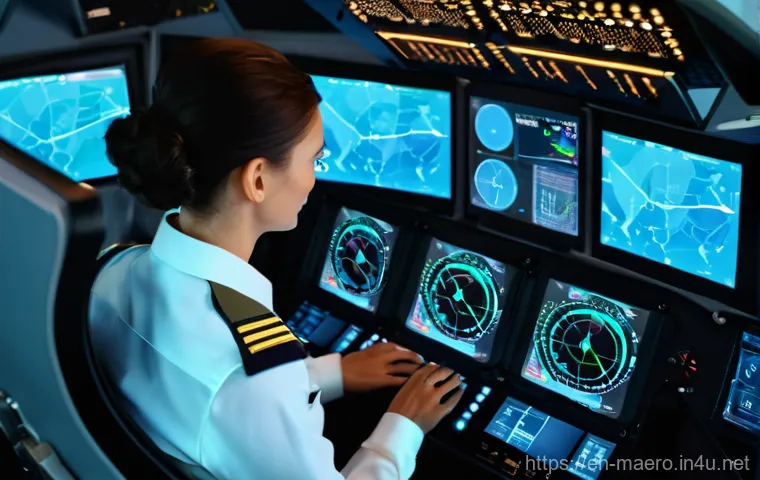
The Early Days: Mechanical Marvels
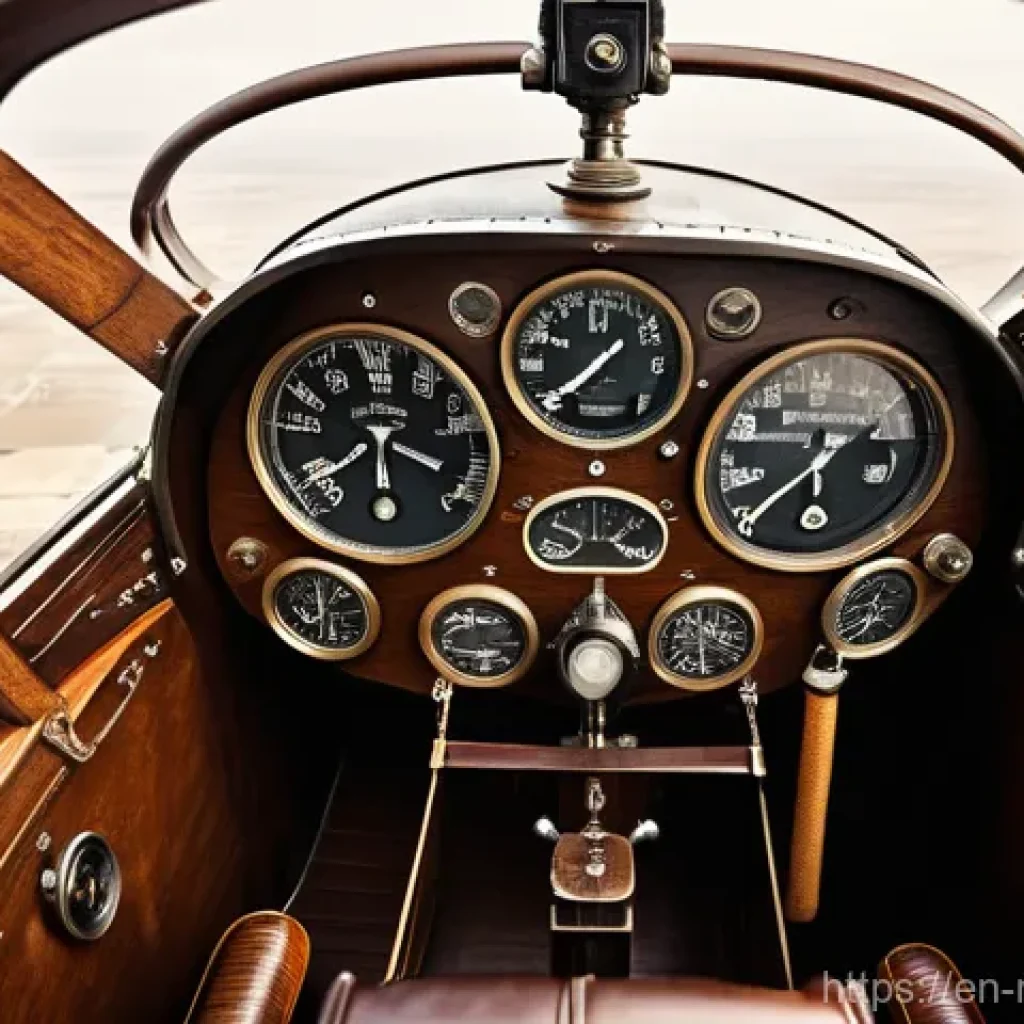
It’s fascinating to look back at the origins of flight control, isn’t it? When aviation first took to the skies, we were in a truly analog era. Imagine stepping into a cockpit where every movement you made with the joystick or rudder pedals was directly connected to the aircraft’s control surfaces – the ailerons, elevators, and rudder – through a complex network of cables, pulleys, and pushrods.
It was a marvel of mechanical engineering, absolutely, but it also demanded an incredible amount of physical effort from the pilot. I’ve heard stories from veteran pilots about how exhausting long flights could be, constantly battling the aerodynamic forces to keep the plane stable and on course.
These early systems, while pioneering, had inherent limitations in terms of responsiveness and the sheer physical strength required, especially as aircraft grew larger and faster.
It was an impressive feat of human and mechanical synergy for its time, but it certainly highlighted the need for something more refined to push the boundaries of aviation.
The complexity and weight of all those mechanical components also presented a significant design challenge, contributing to the overall mass of the aircraft and limiting potential performance.
Every single input required direct physical force, and any slack or friction in the system could translate to a less-than-precise response from the aircraft.
This was particularly true for larger aircraft where the control forces became immense.
The Dawn of Electronics: Why We Needed a Change
As aircraft designs evolved, becoming faster, heavier, and more complex, the limitations of purely mechanical and even hydro-mechanical systems became glaringly apparent.
Pilots were increasingly strained by the physical demands, and maintaining precise control, especially in challenging weather conditions like turbulence, became a monumental task.
I remember reading about how the introduction of hydraulic systems was a significant step forward, reducing pilot effort by using hydraulic assistance to move control surfaces.
But even then, it was still a largely physical connection. The aviation industry was on the cusp of a major transformation, recognizing that direct mechanical linkages, with all their weight and potential for failure, simply couldn’t keep pace with the ambitions of modern aerospace engineering.
We needed a system that offered not just assistance, but a fundamental rethinking of how pilot commands translated to aircraft movement – a system that could be lighter, more responsive, and intrinsically safer by filtering out potentially dangerous inputs.
The vision was to move beyond bulky mechanics to something more elegant and robust, a system that could handle the increasing speed and complexity without overwhelming the pilot or compromising safety.
This realization paved the way for the digital age in flight control, promising a future where aircraft could achieve unparalleled levels of performance and efficiency.
The Brains of the Bird: How Fly-by-Wire Changed Everything
Decoding the Signals: How FBW Works
The advent of Fly-by-Wire (FBW) systems marked a true paradigm shift in aviation, completely revolutionizing how pilots interact with their aircraft. Instead of those heavy cables and pulleys, our inputs are now converted into electronic signals.
It’s truly incredible! When I move the side-stick in an FBW aircraft, that action generates an electrical signal that zips off to the flight control computers.
These super-smart computers then take those signals, combine them with data from a myriad of sensors – think speed, altitude, attitude, and even external factors like wind gusts – and then calculate precisely how to move the control surfaces.
The beauty of it is that the computers then send their own electrical signals to actuators, which smoothly and precisely move the ailerons, elevators, and rudder, orchestrating the aircraft’s dance through the sky.
This intricate process means the pilot isn’t directly “flying” the control surfaces anymore; they’re communicating their intent to the aircraft’s digital brain, which then executes the command in the safest and most efficient way possible.
It’s like having an incredibly intelligent co-pilot constantly optimizing every minute adjustment, taking away the grunt work and letting the human focus on the bigger picture.
This system truly changed the game by significantly reducing the weight that came with mechanical linkages and dramatically increasing the precision of control, something I’ve seen firsthand makes a huge difference in smooth flights.
Safety Nets and Performance Boosts: The Real-World Impact
The real magic of Fly-by-Wire isn’t just in its digital elegance; it’s in the tangible safety and performance enhancements it brings. One of the most critical features, in my opinion, is “envelope protection.” This isn’t just a fancy term; it’s a built-in guardian that prevents the aircraft from entering potentially dangerous flight conditions, like stalls or excessive structural loads, by overriding pilot commands that could push the plane beyond its safe operating limits.
I’ve personally felt the subtle yet firm corrections these systems make, knowing that they’re there to keep us safe even when instincts might push us too far.
This makes FBW-equipped aircraft not only safer but also more forgiving and easier to handle, especially during critical phases of flight or unexpected emergencies.
Think about it: during a severe thunderstorm, for example, the FBW system, with its advanced sensors and real-time data analysis, can help the aircraft navigate turbulent weather with remarkable ease, allowing pilots to concentrate on managing the storm rather than wrestling with controls.
Beyond safety, FBW systems also contribute significantly to fuel efficiency by optimizing control surface movements for all conditions, reducing drag and unnecessary fuel burn.
And for us passengers, it often translates to a smoother, more comfortable flight – a definite win in my book!
Beyond Human Hands: AI’s Growing Role in the Cockpit
AI as Your Co-Pilot: Enhancing Decision-Making
Stepping into the modern cockpit, it’s clear that AI isn’t just a futuristic concept anymore; it’s becoming an integral part of the flight crew, serving as a powerful “co-pilot” that fundamentally changes how decisions are made.
We’re talking about sophisticated AI-driven avionics systems that process vast amounts of real-time data – from weather patterns and air traffic to the aircraft’s own performance metrics – to provide pilots with actionable insights almost instantaneously.
It’s like having a hyper-efficient research team constantly feeding you the most relevant information, reducing cognitive load and allowing pilots to focus on higher-level strategic planning and critical problem-solving.
These systems can automate routine tasks, manage flight paths, and even offer crucial support during emergencies, essentially augmenting human capabilities rather than replacing them.
I’ve observed firsthand how this collaborative approach, often termed Human-Automation Teaming (HAT), enhances situational awareness and reduces fatigue, especially on long-haul flights.
The goal isn’t to remove the human element but to elevate it, ensuring that the ultimate decision-making power remains with the experienced pilot, supported by an incredibly intelligent digital assistant that makes flying safer and more efficient.
It’s a delicate balance, but one that is constantly being refined to leverage the best of both human intuition and machine precision.
Learning from the Skies: Machine Learning in Action
What truly excites me about AI’s presence in aviation is the incredible learning capability that machine learning (ML) brings to the table. These intelligent algorithms aren’t just following programmed rules; they’re constantly analyzing colossal volumes of flight data to detect patterns, predict outcomes, and refine their performance in real-time.
Imagine an aircraft that can dynamically adapt to changing aerodynamic conditions, reducing the risk of mid-air stalls by optimizing airflow over its wings.
Researchers are already making incredible strides in this area, using deep reinforcement learning (DRL) to control experimental devices like synthetic jets on wing surfaces.
My research shows that this approach has demonstrated a remarkable 9% reduction in “turbulence separation bubbles” – those nasty pockets of stalled airflow that can drastically affect a plane’s lift and drag – significantly outperforming older methods that achieved only a 6.8% reduction.
It’s like the aircraft is learning from every gust of wind, every slight change in air pressure, becoming smarter and more resilient with each flight.
This continuous learning enhances stability and provides a level of precision that was simply unimaginable a few decades ago. This isn’t just about tweaking existing systems; it’s about fundamentally rethinking how aircraft interact with their environment, leading to groundbreaking improvements in both safety and energy efficiency.
Smart Maintenance, Safer Flights: The Power of Predictive Analytics
Foreseeing the Future: AI-Driven Maintenance
One area where AI and machine learning are making a monumental impact, often unseen by the flying public, is in aircraft maintenance. Gone are the days when maintenance was purely reactive, waiting for something to break, or strictly time-based, replacing parts whether they needed it or not.
We’re now in the era of “predictive maintenance,” and it’s a game-changer for safety and efficiency. AI-driven systems tirelessly analyze vast amounts of data collected from countless sensors across every critical component of an aircraft – from engine performance metrics and vibration levels to temperature fluctuations.
These intelligent algorithms can detect subtle anomalies and patterns indicative of potential failures long before they escalate into serious issues. I’ve seen how this proactive approach means maintenance teams can intervene precisely when needed, preventing unscheduled downtime and dramatically increasing aircraft availability.
It’s not just about fixing things; it’s about anticipating, optimizing, and ensuring that every single part of the aircraft is performing at its peak.
This shift minimizes operational disruptions, significantly reduces costs, and most importantly, enhances overall fleet reliability and safety by keeping potential problems grounded before they ever become a hazard in the sky.
Optimizing Operations: From Parts to Pilots
The ripple effect of AI in maintenance extends far beyond just identifying faulty components. It’s transforming the entire operational ecosystem of airlines.
Think about supply chain optimization: AI algorithms are now predicting the demand for spare parts with incredible accuracy, ensuring that components are available when needed without the massive costs and inefficiencies of overstocking.
This translates to faster repairs and less aircraft downtime, which is a huge win for airlines and passengers alike. Beyond that, AI powers automated diagnostics, rapidly identifying issues by comparing current data against historical failure patterns, speeding up troubleshooting, and reducing ground time.
Even resource allocation – assigning the right mechanics with the right skills to the right tasks – is becoming more efficient through AI. And it doesn’t stop at hardware.
AI is also enhancing “crew resource management” systems, providing flight crews with real-time data insights and predictive analytics that improve decision-making, optimize scheduling, and manage workload more effectively.
This holistic approach, from the smallest bolt to the entire crew, ensures peak performance and, critically, peak safety at every stage of flight operations.
| Aspect | Traditional Maintenance | AI-Driven Predictive Maintenance |
|---|---|---|
| Detection Method | Scheduled inspections, reactive repairs, manual checks | Continuous sensor data analysis, pattern recognition, anomaly detection |
| Intervention Timing | Fixed intervals or after failure occurs | Just-in-time, before anticipated failure |
| Downtime Impact | Higher unplanned downtime, potential for delays/cancellations | Reduced unplanned downtime, optimized scheduling, increased availability |
| Cost Efficiency | Higher costs due to reactive repairs, unnecessary replacements, inventory excess | Significant cost savings from fewer unexpected repairs, optimized spare parts inventory, extended component lifespan |
| Safety Enhancement | Relies on human vigilance and adherence to schedules | Proactive identification of potential issues, enhanced reliability, reduced human error |
| Data Utilization | Limited, often manual record-keeping | Vast amounts of real-time and historical data analyzed for insights |
Navigating the Unseen: AI for Aerodynamics and Environmental Efficiency

Mastering the Airflow: Aerodynamic Optimizations
When we talk about sophisticated flight control, it’s not just about guiding the plane; it’s about making it interact with the air in the most intelligent way possible.
AI is truly taking us to a new level here, specifically in aerodynamic optimization. I find it absolutely mind-blowing that AI systems can now optimize airflow around an aircraft’s wings in real-time.
This isn’t just about making the plane slipperier in the air; it’s about fundamentally enhancing safety by preventing dangerous phenomena like mid-air stalls.
Imagine an aircraft that actively senses and adapts to flow detachment – where the air moving over the wing breaks away, creating those infamous “turbulent separation bubbles.” AI systems are being developed and tested to control tiny, experimental devices that pulse air in and out of the wing surface, essentially smoothing out these turbulent areas.
This advanced control, powered by deep reinforcement learning, has shown remarkable improvements in reducing these bubbles, leading to enhanced lift, reduced drag, and a significantly more stable flight.
It’s like giving the aircraft a living, breathing skin that intelligently interacts with the air, making split-second adjustments that even the most skilled human pilot couldn’t manage.
This is a massive leap in how we approach aircraft design and control, pushing the boundaries of what’s aerodynamically possible.
Greener Skies: Fuel Efficiency and Sustainability
Beyond the immediate safety and performance benefits, AI is playing an undeniably crucial role in making aviation more sustainable, a topic I feel incredibly passionate about.
It’s no secret that the industry faces immense pressure to reduce its environmental footprint, and AI offers powerful solutions. By analyzing massive datasets, including real-time weather conditions, air traffic patterns, and even atmospheric pressure, AI algorithms are optimizing flight paths to an unprecedented degree.
This isn’t just about finding the shortest route; it’s about finding the *most fuel-efficient* route, minimizing consumption and, consequently, reducing carbon emissions.
I’ve heard incredible stories about how these systems can adjust to unexpected wind changes or air traffic congestion on the fly, rerouting planes to avoid inefficient maneuvers or holding patterns.
Moreover, AI is deeply integrated into the very design process of new aircraft. It helps engineers conceptualize and test more efficient engine designs and discover innovative lightweight materials, further reducing the overall carbon footprint of each flight.
This dual approach – optimizing operations and enhancing design – is critical, and it shows how AI is a vital partner in our journey towards a cleaner, greener future for air travel, ensuring that we can continue to explore the skies responsibly.
The Next Frontier: Advanced Air Mobility and Autonomous Dreams
Urban Air Taxis and Beyond: What is AAM?
The dream of flying cars might still be a little ways off for everyday commuters, but the concept of Advanced Air Mobility (AAM) is rapidly bringing us closer to a revolutionary shift in how we travel.
This isn’t just science fiction anymore; it’s happening! We’re talking about things like Electric Vertical Take-Off and Landing (eVTOL) aircraft, which are essentially urban air taxis designed for short-range travel, promising to whisk us over congested city streets.
But AAM is so much more than just passenger transport; it encompasses everything from cargo drones delivering critical medical supplies to remote areas to unmanned aircraft systems (UAS) transforming logistics.
I truly believe AAM has the potential to reshape urban and regional mobility, drastically reducing traffic congestion in our cities and connecting remote communities that are currently underserved by traditional transportation.
Imagine cutting a two-hour drive to the airport down to a 15-minute air taxi ride – that’s the kind of convenience and efficiency we’re talking about.
The innovation in this space is absolutely breathtaking, and it’s exhilarating to watch these concepts move from drawing boards to test flights, hinting at a future where our skies are much more active and accessible.
The Path to Pilotless: Progress and Milestones
The journey toward fully autonomous flight, where aircraft operate without direct human pilots, is perhaps the most captivating aspect of this technological revolution.
It’s a field I’ve been following closely, and the progress is genuinely astounding. Advances in AI, machine learning, and sensor technology are the rocket fuel behind this.
Modern pilotless aircraft are already equipped with incredibly sophisticated navigation systems, real-time data processing capabilities, and robust safety protocols that allow them to operate independently in specific applications like cargo delivery and disaster response.
I’ve seen reports of successful test flights by major players like Boeing and Airbus, as well as a flurry of innovative startups, demonstrating the feasibility of autonomous operations.
These milestones are not just technical achievements; they’re laying the groundwork for broader adoption in the aviation industry, paving the way for a future where autonomous urban transport and even commercial passenger flights become a tangible reality.
Of course, it’s a gradual and deliberate integration, with safety and reliability as the absolute highest priorities, but the trajectory is clear: our skies are becoming increasingly intelligent and self-sufficient.
Keeping it Real: Human Touch in an Automated World
The Evolving Role of the Human Pilot
With all this talk of advanced algorithms, AI co-pilots, and autonomous systems, it’s natural to wonder about the future of the human pilot. My take is, it’s not about replacement; it’s about evolution.
Automation doesn’t make human work disappear; it fundamentally changes it. Pilots are transitioning from direct manual control to a more supervisory, monitoring, and strategic role.
Their focus shifts to higher-level decision-making, understanding complex system interactions, and managing the overall flight mission. I’ve spoken with pilots who acknowledge that while automation reduces the physical workload, it often redistributes the cognitive load, demanding new skills in understanding and interacting with highly sophisticated systems.
This is why “human-automation teaming” (HAT) is so critical – it’s about fostering collaboration where humans and autonomous agents work together, leveraging the strengths of both.
We need to ensure that training evolves to maintain essential manual flying skills, even as automation handles more routine tasks. The human element, with its adaptability, intuition, and problem-solving abilities in unforeseen circumstances, remains invaluable.
It’s about empowering pilots with better tools, not removing their expertise from the equation.
Navigating the Challenges: Trust, Regulation, and Cybersecurity
As thrilling as the future of intelligent flight is, we can’t ignore the significant hurdles we still need to clear. Building public trust in highly automated and eventually pilotless aircraft is paramount; people need to feel absolutely confident in the safety and reliability of these systems.
This isn’t something that happens overnight, and it requires transparent communication and a flawless safety record from the industry. Then there’s the monumental task of establishing robust regulatory frameworks.
Current regulations weren’t designed for AI-driven autonomous systems, so aviation authorities worldwide are working to develop new methods for testing, certifying, and safely integrating these capabilities into our airspace.
This is a complex dance between fostering innovation and ensuring ironclad safety standards. And let’s not forget cybersecurity. Every connected system, every line of code, represents a potential vulnerability.
Ensuring that these sophisticated flight control algorithms and autonomous aircraft are protected from cyber threats is a non-negotiable imperative. Finally, the infrastructure for Advanced Air Mobility, such as vertiports and charging stations, needs significant investment and coordinated development.
These aren’t roadblocks, but rather exciting new frontiers that demand a collaborative effort from engineers, regulators, and the public to truly unlock the full potential of smarter, safer skies.
Wrapping Up
What an incredible journey we’ve taken, from the earliest mechanical marvels in the sky to the cutting-edge AI transforming aviation as we know it! It’s truly inspiring to see how far we’ve come, and honestly, it makes me so excited for what’s next. This evolution isn’t just about faster or bigger planes; it’s about making flight safer, more efficient, and ultimately, more accessible for everyone. Knowing that intelligent systems are working tirelessly behind the scenes to optimize every aspect of air travel, from maintenance to aerodynamics, gives me immense confidence in the future of flight. It’s a testament to human ingenuity, continuously pushing boundaries and blending our intelligence with that of machines to create a truly revolutionary experience.
Good to Know Information
Here are a few extra nuggets of info and tips I’ve picked up that you might find super interesting about the future of aviation:
1. Did you know that the first commercially available aircraft with a full digital fly-by-wire system was the Airbus A320, introduced in 1988? It truly set the stage for modern flight control and changed the game for pilots by integrating computer assistance into every flight command. From my experience, stepping into one of those cockpits feels like entering a different era compared to older aircraft, with an immediate sense of precision and responsiveness.
2. Keep an eye out for “UAM Hubs” or “Vertiports” in major cities! These are essentially the future airports for urban air mobility (UAM) vehicles like eVTOLs. They’re designed to seamlessly integrate air taxis into existing urban transportation networks, aiming to cut down travel times significantly. I’ve been following some of the concepts for London and New York, and they look absolutely incredible, promising a whole new way to commute.
3. If you’re ever curious about pilot training for these advanced systems, it’s fascinating! Modern pilot training now heavily focuses on “human-automation teaming,” where pilots learn to effectively manage and collaborate with AI systems, rather than just manually flying the aircraft. It’s a shift from being the sole operator to becoming a sophisticated system manager, and I think it’s a brilliant way to leverage both human and machine strengths.
4. Many airlines are already using AI for dynamic route optimization to save fuel. This isn’t just about picking the shortest path; it’s about factoring in real-time weather, air traffic, and even atmospheric pressure to find the most fuel-efficient flight profile. As someone who cares deeply about sustainability, seeing these smart technologies contribute to greener skies truly makes me happy.
5. Want to dive deeper? Look into organizations like NASA and the European Union Aviation Safety Agency (EASA). They are at the forefront of researching and regulating advanced air mobility and autonomous flight. Their ongoing projects and published reports offer a treasure trove of information about the latest developments and future roadmaps in intelligent aviation – it’s a great way to stay informed about what’s coming next!
Key Takeaways
As we wrap up our deep dive into the digital revolution soaring through our skies, it’s clear that aviation is undergoing a transformation unlike any other. We’ve seen how the journey from cumbersome mechanical controls to sophisticated digital fly-by-wire systems has profoundly enhanced safety, precision, and efficiency, truly making flight an experience of controlled grace. This shift wasn’t merely an upgrade; it was a fundamental rethinking of how aircraft interact with their environment and with human input. What excites me most is the ever-expanding role of artificial intelligence, not as a replacement for human expertise, but as an incredibly powerful co-pilot and an unseen guardian. AI is revolutionizing everything from predicting maintenance needs before they arise, ensuring our aircraft are always in peak condition, to dynamically optimizing aerodynamics for a smoother and more fuel-efficient flight. It’s like having an invisible team of experts constantly working to make every journey better. Furthermore, the vision of Advanced Air Mobility, with urban air taxis and autonomous cargo drones, is rapidly moving from concept to reality, promising to reshape how we think about transportation. While the path ahead still involves navigating crucial challenges like public trust, regulatory frameworks, and cybersecurity, I’m absolutely confident that through continued innovation and collaborative effort, the future of flight will be smarter, safer, and more sustainable for generations to come. It’s a truly exhilarating time to be witnessing and experiencing this incredible evolution firsthand!
Frequently Asked Questions (FAQ) 📖
Q: What exactly are flight control algorithms, and how have they transformed aviation over time?
A: Oh, these are truly the silent wizards behind every smooth flight! At their core, flight control algorithms are the sophisticated software instructions that interpret pilot inputs and environmental data to manage an aircraft’s movement, stability, and trajectory.
Think of them as the airplane’s brain and nervous system, constantly making tiny adjustments to keep everything in perfect balance. When I first started digging into this, it was genuinely mind-boggling how far we’ve come.
Back in aviation’s early days, it was all about direct mechanical linkages – pulleys, cables, and rods physically connecting the pilot’s controls to the wings and tail.
It was an incredible feat for its time, but imagine the sheer physical effort and limitations! Then came the hydraulic systems, which brought in power assistance, making it much easier for pilots to maneuver larger, faster aircraft.
But the real game-changer, in my opinion, was the “Fly-By-Wire” era, starting around the 1970s. This is where electronic signals replaced those heavy mechanical connections, leading to incredibly precise and responsive control.
It’s like going from manual steering to power steering, but on a whole other level! Nowadays, we’re deep into the digital age, with these algorithms continuously evolving.
They are now far more adaptive, integrating real-time data from countless sensors to predict potential issues and optimize flight performance in ways we only dreamed of a few decades ago.
Every time I see a modern airliner effortlessly navigating complex airspace, I’m reminded of the incredible ingenuity that went into developing these digital marvels.
Q: How are
A: I and Machine Learning making these flight control algorithms even smarter and safer? A2: This is where things get really exciting, and frankly, a bit futuristic!
I’ve been following the integration of Artificial Intelligence (AI) and Machine Learning (ML) into flight control, and it’s nothing short of revolutionary.
These technologies are essentially giving aircraft an unprecedented ability to learn and adapt, far beyond what traditional programming could achieve.
Imagine an aircraft that can “learn” from millions of hours of flight data, identifying patterns and making intelligent predictions. That’s what AI brings to the table.
It means algorithms can dynamically adjust control strategies in real-time to respond to unexpected environmental shifts, like severe wind gusts or sudden changes in aircraft weight, with incredible accuracy.
I’ve heard stories from folks who’ve worked on these systems, and the level of predictive capability is just astounding. AI isn’t just reacting; it’s anticipating.
It helps optimize flight paths for fuel efficiency and reduced flight times, and it plays a massive role in predictive maintenance, alerting operators to potential component failures before they even happen, dramatically boosting safety and reducing costly downtime.
For pilots, it means an intelligent co-pilot, an AI assistant, that can advise on routine tasks, run through checklists, or suggest optimal routes and altitudes based on real-time weather and traffic, effectively reducing workload and enhancing safety.
It’s a true partnership between human ingenuity and artificial intelligence, pushing the boundaries of what’s possible in the skies.
Q: What’s on the horizon for flight control algorithms, especially with the rise of autonomous flight and
A: dvanced Air Mobility (AAM)? A3: The future, my friends, is going to be truly wild, and flight control algorithms are at the very heart of it! We’re talking about a world where Advanced Air Mobility (AAM) and Urban Air Mobility (UAM) aren’t just concepts, but a daily reality.
Picture electric vertical takeoff and landing (eVTOL) air taxis buzzing silently through cityscapes, or autonomous drones delivering packages with unparalleled efficiency.
The algorithms underpinning these systems will need to be incredibly robust, capable of handling highly dynamic urban environments, complex air traffic management, and constant real-time decision-making, all without human intervention.
One of the biggest challenges, as I see it from my discussions with industry insiders, is ensuring ironclad cybersecurity, because these autonomous systems rely so heavily on data and communication networks.
And let’s not forget public trust – convincing passengers to fully embrace autonomous planes will require an impeccable safety record and transparent regulatory frameworks.
NASA, for example, is heavily invested in researching how to safely integrate these emerging electric air taxi technologies into our existing airspace.
We’re also looking at cutting-edge advancements like quantum computing potentially being applied to flight control, which could redefine what’s possible in terms of processing power and complex decision-making.
While there are definitely hurdles to clear, every challenge feels like an exciting new frontier for innovation, paving the way for a future where flying is even more reliable, accessible, and an integral part of our daily lives.