Exploring the cosmos has always captured humanity’s imagination, pushing the boundaries of what we thought possible. Advances in space exploration technology have transformed once-dreamlike missions into tangible achievements, from landing rovers on Mars to deploying powerful telescopes that peer into distant galaxies.
These breakthroughs not only deepen our understanding of the universe but also drive innovation here on Earth, impacting industries and everyday life.
As private companies and international agencies race to expand our reach beyond the stars, the future of space travel looks more exciting than ever. Curious about how these incredible technologies work and what lies ahead?
Let’s dive in and uncover the fascinating world of space exploration technology together!
Revolutionizing Space Travel with Propulsion Breakthroughs
Next-Generation Rocket Engines
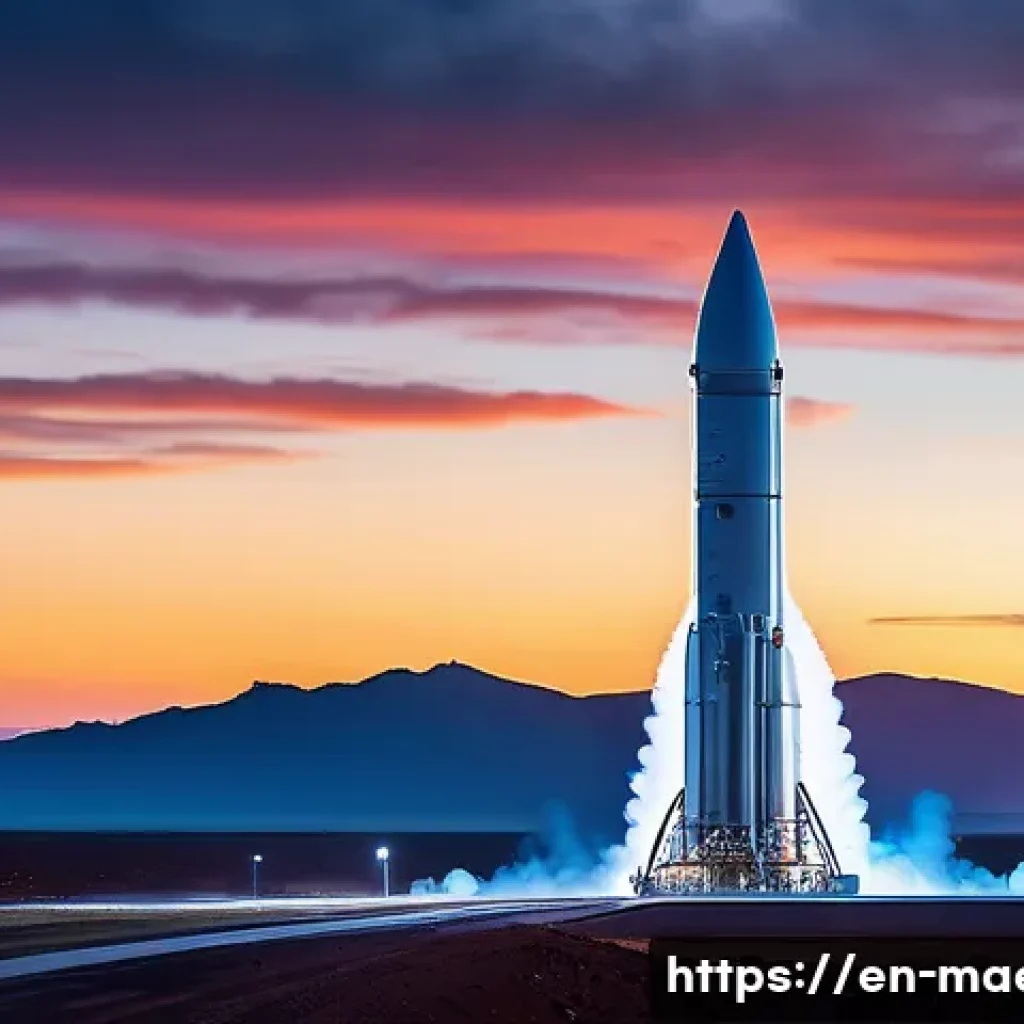
When you think about space travel, rockets are the heart and soul of the journey. Recent advancements in rocket propulsion have been nothing short of game-changing.
Traditional chemical rockets have been around for decades, but now, innovations like reusable engines and more efficient fuel mixtures are pushing the envelope.
For example, companies like SpaceX have demonstrated how reusable engines drastically cut costs and turnaround times. From my own observations following these developments, the move to methane-based engines promises cleaner burns and greater performance, which could make interplanetary travel more practical in the near future.
The technology behind these engines involves complex thermodynamics and materials science, but the bottom line is they’re making space missions more sustainable and frequent.
Electric and Ion Thrusters
Electric propulsion systems, especially ion thrusters, have quietly revolutionized deep-space exploration. Unlike chemical rockets that burn fuel quickly, ion thrusters use electric fields to accelerate ions, providing a continuous but gentle push.
What’s fascinating is how these thrusters enable spacecraft to travel for years with minimal fuel, ideal for missions to the outer planets or asteroids.
I recall reading about NASA’s Dawn spacecraft, which used ion propulsion to orbit both Vesta and Ceres in the asteroid belt—a feat impossible with traditional engines.
Although the thrust is low, the efficiency is unmatched, and as solar panel technology improves, ion thrusters will become even more vital for long-haul missions.
Nuclear Propulsion Prospects
Nuclear propulsion is edging closer from science fiction to reality. By harnessing nuclear reactions to generate immense heat, these engines could propel spacecraft much faster than chemical rockets.
The idea is to use either nuclear thermal propulsion, which heats hydrogen propellant to produce thrust, or nuclear electric propulsion, which converts nuclear energy into electricity for ion engines.
From what experts suggest, this tech could cut travel time to Mars by half, which is huge considering the risks astronauts face on long missions. Though regulatory and safety challenges remain, I believe that ongoing research and testing might see nuclear propulsion playing a key role in human deep-space exploration within the next few decades.
Cutting-Edge Robotics Transforming Space Missions
Autonomous Rovers and Landers
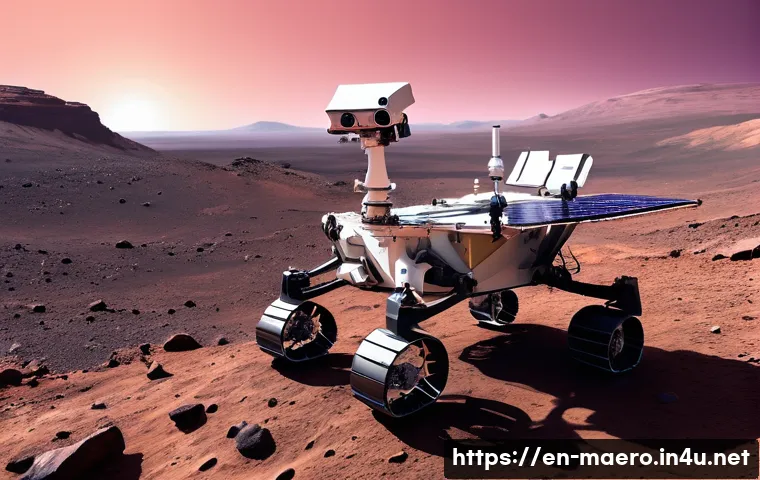
Robotics have become indispensable for exploring planetary surfaces where human presence is either impossible or too risky. Autonomous rovers like NASA’s Perseverance on Mars showcase how robots can navigate treacherous terrain, collect samples, and even perform scientific experiments independently.
What’s impressive is how these machines combine AI, advanced sensors, and rugged engineering to adapt to unexpected challenges. From personal experience following mission updates, the level of autonomy has improved so much that operators on Earth only intervene during critical moments.
This autonomy not only speeds up exploration but also opens doors for missions in even harsher environments like Europa’s icy surface.
Robotic Arms and Sample Collection Tools
One detail that often gets overlooked is the sophistication of robotic appendages on spacecraft and landers. These robotic arms are marvels of precision engineering, capable of delicate operations such as drilling into rocks or picking up tiny soil samples without contamination.
I remember watching footage of the Mars rover’s arm gently extracting core samples, which made me appreciate the complexity behind seemingly simple tasks.
These tools are designed to withstand extreme temperatures and abrasive dust, ensuring reliability during critical mission phases. Such technology is crucial for bringing back extraterrestrial materials that might hold clues about life beyond Earth.
Swarm Robotics for Planetary Exploration
The future of space robotics might lie in swarm technology—groups of small, cooperative robots that work together to cover more ground and perform complex tasks.
This concept mimics how social insects operate, providing robustness and flexibility. Imagine dozens of tiny rovers spreading out across a moon’s surface, sharing data, and relaying information back to a mother ship.
I’ve come across several research projects exploring this idea, and the potential benefits are enormous: increased redundancy, enhanced data collection, and reduced mission costs.
While still experimental, swarm robotics could revolutionize how we map and study celestial bodies in the coming years.
Advanced Space Telescopes Opening New Windows
Beyond Hubble: The James Webb Space Telescope
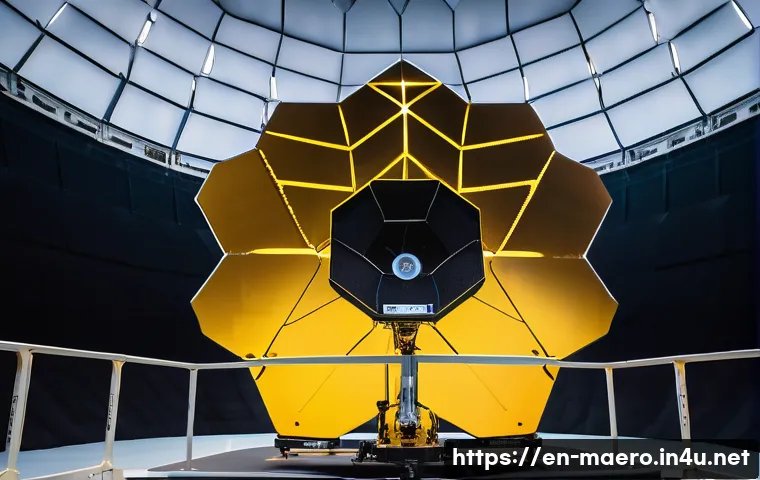
The James Webb Space Telescope (JWST) is arguably the crown jewel of current space observation technology. Unlike its predecessor, Hubble, JWST operates primarily in the infrared spectrum, allowing it to peer through cosmic dust and see farther back in time.
What I find personally thrilling is how JWST is already reshaping our understanding of the early universe, star formation, and even exoplanet atmospheres.
The technology behind it is mind-boggling: a giant segmented mirror that unfolds in space, ultra-sensitive detectors, and a sunshield the size of a tennis court.
These innovations make JWST a powerful tool for astronomers and have sparked a renewed excitement about what lies beyond our galaxy.
Miniaturized Space Telescopes and CubeSats
Space observation isn’t reserved for massive, billion-dollar projects anymore. Miniaturized telescopes and CubeSats are democratizing access to space data.
These small satellites, often no larger than a shoebox, can carry specialized instruments to monitor everything from Earth’s atmosphere to distant stars.
I’ve noticed more universities and startups launching CubeSats, which serve as cost-effective testbeds for new sensor technologies. Their agility and lower launch costs mean they can be deployed in constellations, providing high-resolution data streams that were unimaginable just a decade ago.
This trend is a perfect example of how space tech is becoming more accessible and versatile.
Adaptive Optics and Imaging Techniques
Adaptive optics technology is another fascinating development that enhances space observation by correcting distortions caused by Earth’s atmosphere or spacecraft movement.
Ground-based telescopes equipped with adaptive optics can rival the clarity of space telescopes, which is impressive considering the challenges of looking through turbulent air.
This tech uses deformable mirrors and real-time sensors to adjust the optical path, resulting in sharper images of planets, stars, and distant galaxies.
For astronomers like myself, who follow these advancements closely, adaptive optics represents a critical step toward more detailed cosmic imaging without always needing to launch costly space instruments.
Data Processing and AI in Space Exploration
Handling the Deluge of Space Data
Modern space missions generate staggering amounts of data—so much that managing and interpreting it has become a huge challenge. Satellites, rovers, and telescopes continuously send back images, sensor readings, and telemetry, which must be processed efficiently to extract meaningful insights.
I’ve seen firsthand how advancements in cloud computing and big data analytics have transformed this process. Mission teams now use sophisticated algorithms to filter noise, identify patterns, and prioritize data for scientists.
Without these tools, valuable discoveries could easily be buried in the sheer volume of information.
Machine Learning for Autonomous Decision Making
Artificial intelligence, especially machine learning, is increasingly embedded in spacecraft systems to enhance autonomy and adaptability. For example, AI algorithms can analyze terrain data in real-time, helping rovers decide the safest path without waiting for commands from Earth.
This capability is crucial for missions with communication delays, like those to Mars or beyond. I find it fascinating how these AI systems learn from new data and improve their performance over time, much like a human operator gaining experience.
Such intelligence reduces risks and increases the chances of mission success in unpredictable environments.
Predictive Maintenance and Fault Detection
Spacecraft reliability is paramount, and predictive maintenance powered by AI is changing the game. Sensors monitor critical systems continuously, feeding data to onboard or ground-based AI models that predict failures before they happen.
From what I’ve gathered, this proactive approach not only extends the lifespan of expensive hardware but also prevents mission-ending malfunctions. For instance, NASA’s rovers use these techniques to detect issues in wheels or power systems early, allowing engineers to adjust operations accordingly.
This blend of technology and foresight is vital when you’re millions of miles away from any repair shop.
Materials Science Shaping the Future of Spacecraft
Lightweight and Durable Materials
One of the unsung heroes of space technology is advanced materials science. Spacecraft need to be incredibly strong yet lightweight to minimize launch costs and withstand harsh space conditions.
Innovations like carbon fiber composites, titanium alloys, and specialized ceramics have made modern spacecraft more resilient. Personally, I’ve been amazed by how these materials resist extreme temperatures, radiation, and micrometeoroid impacts, ensuring that delicate instruments survive long missions.
The development of such materials often involves extensive testing and collaboration between space agencies and industry leaders, underscoring their importance in mission success.
Self-Healing and Radiation-Resistant Coatings
Emerging materials now include self-healing polymers and coatings that protect spacecraft from radiation damage. This is a fascinating field where materials can autonomously repair minor cracks or abrasions caused by micrometeoroids or thermal cycling.
I recently read about experiments where these coatings significantly extended the operational life of satellites. Radiation shielding, meanwhile, is critical for protecting both hardware and future astronauts from cosmic rays.
Materials infused with hydrogen or boron compounds are proving effective, and ongoing research aims to make these solutions lighter and more efficient.
Thermal Management Innovations
Managing heat in space is a complex challenge because there’s no atmosphere to dissipate it naturally. Advanced thermal management systems use phase-change materials, heat pipes, and radiators to regulate spacecraft temperature.
From the missions I’ve tracked, engineers spend months designing these systems to maintain optimal conditions for instruments and crew. Innovations like variable emissivity surfaces that adjust heat radiation dynamically are particularly exciting.
These technologies not only protect sensitive equipment but also improve energy efficiency, which is crucial for long-duration missions where power resources are limited.
Space Communication Systems Breaking Barriers
High-Speed Laser Communication
Traditional radio waves have served space communication well but are limited in bandwidth and speed. Enter laser communication systems, which use light to transmit data at rates far exceeding radio frequencies.
I remember the excitement when NASA successfully tested laser links that could send data from lunar orbit to Earth at gigabit speeds. This leap means future missions can stream high-definition video and transfer large scientific datasets quickly, enhancing real-time decision-making.
While atmospheric interference poses challenges for Earth-based receivers, ongoing improvements in adaptive optics and satellite relays are addressing these issues.
Interplanetary Internet Networks
The concept of an interplanetary internet might sound futuristic, but it’s actively being developed to support continuous communication across the solar system.
Unlike Earth’s internet, this network must handle massive delays and disruptions caused by vast distances and planetary rotations. I find it fascinating how delay-tolerant networking protocols are designed to store and forward data until connections are restored.
This infrastructure will be essential for coordinating fleets of spacecraft, supporting astronauts on Mars, and even enabling robotic mining operations on asteroids.
The idea of a solar system-wide communication network is becoming more tangible every year.
Quantum Communication Prospects
Quantum communication is another frontier that could revolutionize space data security and speed. Using principles like quantum entanglement, future communication systems might achieve unhackable data transmission and instantaneous information sharing over vast distances.
Although still in early experimental stages, I’ve followed several projects aiming to test quantum links between satellites and ground stations. The potential applications for secure command and control of spacecraft, as well as for scientific data integrity, are huge.
If successful, quantum communication could redefine how we think about space networks in the decades ahead.
Comparing Key Space Exploration Technologies
| Technology | Main Advantage | Current Application | Future Potential |
|---|---|---|---|
| Reusable Rocket Engines | Cost reduction and faster turnaround | Orbital launches and Mars missions | Interplanetary travel and space tourism |
| Ion Thrusters | High fuel efficiency for long missions | Dawn spacecraft and deep-space probes | Outer planet exploration and cargo transport |
| Robotic Rovers | Autonomous surface exploration | Mars, Moon, asteroid missions | Swarm exploration and sample return |
| Space Telescopes (JWST) | Infrared observation of distant universe | Exoplanet atmospheres and galaxy studies | Deeper cosmic insights and new discoveries |
| Laser Communication | High data transmission rates | Lunar orbit data transfer | Interplanetary internet and real-time control |
| Advanced Materials | Lightweight, durable, and protective | Spacecraft hulls and thermal systems | Self-healing and radiation shielding for crewed missions |
글을 마치며
Space exploration is rapidly evolving thanks to groundbreaking advancements in propulsion, robotics, telescopes, and communication systems. These technologies not only expand our reach into the cosmos but also make missions safer, more efficient, and cost-effective. As we continue to push boundaries, the future of space travel holds incredible promise for scientific discovery and human exploration. Embracing these innovations will be key to unlocking the mysteries of our universe in the decades ahead.
알아두면 쓸모 있는 정보
1. Reusable rocket engines significantly reduce launch costs and turnaround times, paving the way for more frequent space missions.
2. Ion thrusters provide unparalleled fuel efficiency, making them ideal for long-duration deep-space exploration.
3. Autonomous rovers equipped with AI can independently navigate and conduct experiments in harsh extraterrestrial environments.
4. The James Webb Space Telescope’s infrared capabilities enable astronomers to see deeper into space and time than ever before.
5. High-speed laser communication promises faster data transfer between spacecraft and Earth, crucial for future interplanetary missions.
중요 사항 정리
Advances in propulsion, such as reusable engines and nuclear options, are transforming how we approach space travel by improving efficiency and reducing costs. Robotics are becoming increasingly autonomous and sophisticated, enabling safer and more thorough planetary exploration. Cutting-edge telescopes and miniaturized satellites are expanding our view of the universe, while AI and big data techniques are essential for managing the enormous volumes of space mission data. Finally, innovations in communication, materials, and thermal management are critical to ensuring mission success and longevity in the challenging environment of space.
Frequently Asked Questions (FAQ) 📖
Q: How do modern space rovers like those on Mars actually operate and send data back to Earth?
A: Modern Mars rovers are marvels of engineering, equipped with a suite of scientific instruments and cameras to analyze the Martian environment. They operate remotely, controlled by teams on Earth who send commands during communication windows when the planets align favorably.
These rovers use onboard computers to execute tasks autonomously, especially when immediate response is needed, like avoiding obstacles. Data is transmitted back via orbiters acting as relay stations, which then beam the information across millions of miles to Earth.
From my experience following mission updates, the delay in communication—sometimes up to 20 minutes one way—means rovers need a degree of independence, making their technology incredibly sophisticated and resilient.
Q: What are the biggest challenges faced in developing technology for deep space exploration?
A: Developing technology for deep space exploration is a complex puzzle. One major challenge is dealing with the harsh environment of space—extreme temperatures, radiation, and micrometeoroids can damage equipment.
Power supply is another hurdle; spacecraft often rely on solar panels or radioactive decay, both with limitations depending on distance from the Sun. Communication delays increase with distance, making real-time control impossible, so systems must be highly autonomous.
I’ve read and seen how engineers spend years testing materials and systems to withstand these conditions, often learning from failures. Plus, cost is a huge factor—every extra pound sent into space means more fuel and money, so designs must be lightweight but durable.
Q: How are private companies changing the future of space exploration compared to traditional government agencies?
A: Private companies have injected fresh energy and innovation into space exploration, shaking up what was once dominated by government agencies like NASA or ESA.
They tend to move faster, take more risks, and focus on cost-efficiency, which has led to breakthroughs like reusable rockets. From what I’ve observed, companies like SpaceX and Blue Origin have dramatically lowered launch costs and opened the door to possibilities like space tourism and lunar colonization.
Their competitive approach accelerates technological development and broadens access to space, complementing the expertise and scale of traditional agencies.
This mix of public and private efforts is creating an exciting, dynamic future where space feels more reachable than ever.