Hey there, fellow curious minds! Have you ever looked at a magnificent skyscraper piercing the clouds, a sleek electric car silently gliding by, or even just your trusty smartphone, and wondered about the genius behind it all?

Well, a huge part of that ‘genius’ is deeply rooted in the captivating world of Mechanical Engineering Physics – truly the beating heart behind so much of our modern existence.
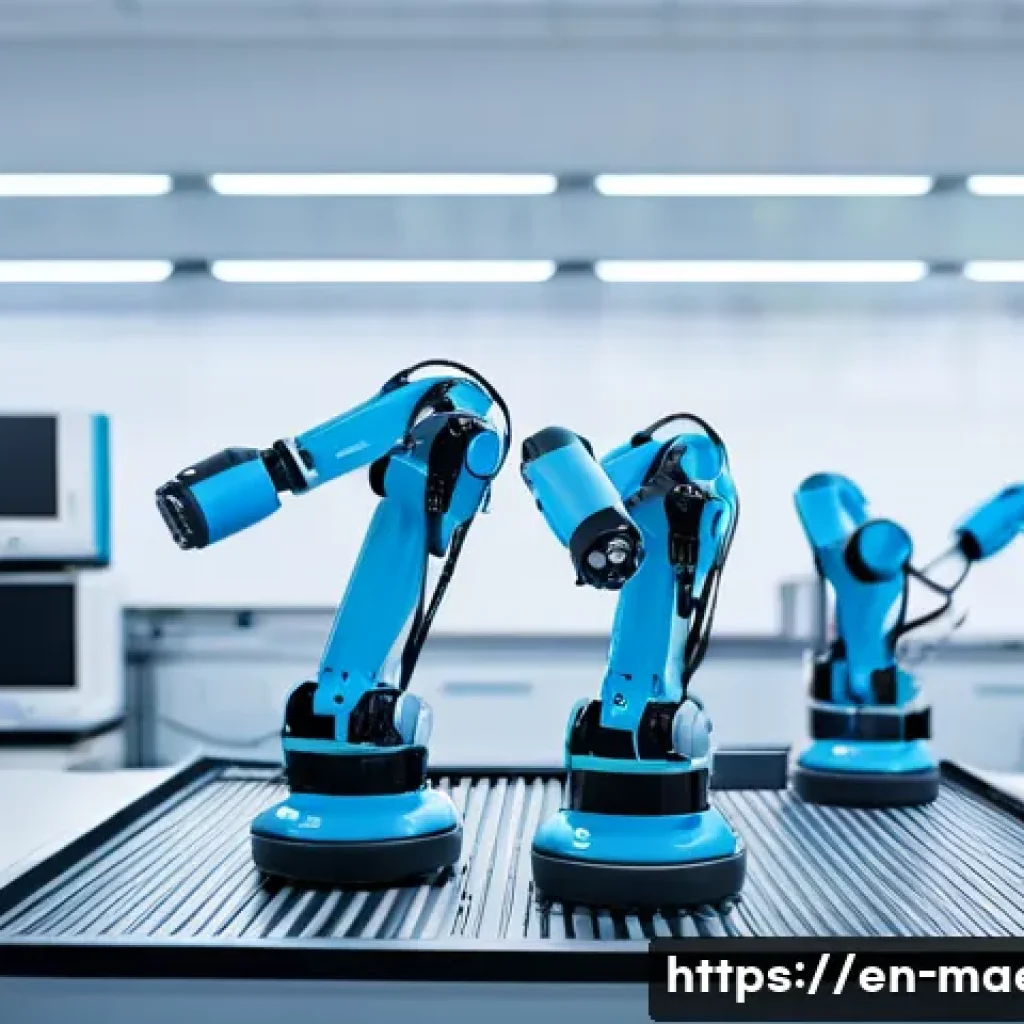
It’s a field that seamlessly blends the raw power of physics with the practical art of engineering, giving us everything from the intricate robotics revolutionizing manufacturing to the cutting-edge sustainable energy systems powering our homes.
I still vividly recall my college days, grappling with thermodynamics equations and then seeing them come to life in a simple engine model; it was like witnessing magic unfold before my eyes, and that experience completely reshaped how I saw the world.
We’re talking about understanding the fundamental laws that govern motion, energy, and materials, then applying that incredible knowledge to build, innovate, and conquer the most complex real-world challenges.
With advancements in AI predicting material fatigue and bio-inspired designs pushing the boundaries of medical technology, the future of this field is electrifying.
If you’re someone who loves to understand how the world truly works, or if you’re just beginning to unlock the incredible possibilities within engineering, trust me, you’re in the right place to start.
This isn’t just about theories; it’s the actual blueprint for tomorrow. Let’s dive deeper and precisely uncover the foundational concepts that are driving relentless innovation and shaping our planet, right below.
Unraveling the Symphony of Motion: Dynamics and Kinematics
Ever marveled at a perfectly executed slam dunk or a satellite effortlessly orbiting Earth? What you’re seeing isn’t just magic; it’s the beautiful, predictable dance governed by the principles of dynamics and kinematics. These aren’t just dry textbook terms; they’re the very language of movement, the foundational bedrock upon which so much of our engineered world stands. When I first started diving into these concepts in college, I remember feeling a bit overwhelmed by the equations. But then, during a lab session, we built a simple catapult. Calculating the projectile’s trajectory, its maximum height, and where it would land felt like solving a puzzle, and watching the small ball actually *do* what my calculations predicted? That was an absolute thrill! It’s about understanding forces, acceleration, and how objects move through space and time. From designing high-speed trains that hug the curves with incredible precision to ensuring the smooth operation of intricate gears in a wind turbine, a deep grasp of motion is utterly non-negotiable. It’s truly the difference between a system that fails spectacularly and one that performs flawlessly for decades, creating a sense of reliability we often take for granted. Thinking about all the moving parts in our lives, from a car engine to the delicate mechanisms in a smartwatch, it’s clear these principles are at play everywhere.
Predicting the Path: From Pendulums to Planets
Kinematics is essentially the geometry of motion – describing how things move without worrying about why. It’s about position, velocity, and acceleration. Dynamics, on the other hand, digs deeper, bringing forces and mass into the picture. This is where Newton’s laws come alive! I recall struggling with a problem involving a complex multi-link robotic arm, trying to map out its range of motion. It was frustrating, but seeing the simulation finally match the real-world prototype was incredibly rewarding. These principles are vital for everything from designing safe amusement park rides to planning space missions with pinpoint accuracy. It’s all about predicting outcomes and ensuring safety and efficiency in every system.
Engineering Human Motion: Beyond the Machine
It’s not just about machines either! Bio-mechanics, a fascinating branch, applies these very same principles to the human body. Think about how prosthetics are designed to mimic natural movement, or how athletic equipment is engineered to optimize performance and prevent injury. I once attended a lecture where a mechanical engineer explained how they analyze a runner’s stride to design better shoes – it was mind-blowing to see physics applied to something so seemingly organic. This holistic approach ensures that innovation isn’t just for metal and circuits, but for enhancing human potential too.
The Hidden Language of Energy: Thermodynamics in Action
Thermodynamics – just saying the word can sometimes bring a slight shiver to students, but honestly, it’s one of the most powerful and fundamentally practical fields within engineering physics. It’s the study of heat and its relation to other forms of energy and work, and it dictates so much of what we experience daily. Every time you turn on your air conditioning, drive your car, or even just boil a kettle for tea, you’re experiencing thermodynamics at work. I remember my first lab where we had to calculate the efficiency of a tiny Stirling engine. The initial results were always off, but by meticulously adjusting the heat source and understanding the cyclical processes, we could get closer to theoretical maximums. It taught me that it’s not just about raw power, but about intelligent design and minimizing waste. This understanding of energy conversion is critical for everything from power generation and refrigeration to designing more efficient combustion engines and sustainable energy systems. It truly is about making the most out of every joule and calorie.
Powering Our World: Cycles and Efficiency
The core of thermodynamics lies in its four laws, which are more like fundamental truths about how energy behaves. These laws govern the design of everything from massive power plants – whether they’re burning fossil fuels, harnessing nuclear fission, or capturing solar energy – to the humble refrigerator in your kitchen. Engineers are constantly pushing the boundaries of efficiency, trying to extract more useful work from less energy input. Think about the pursuit of better fuel economy in cars or the development of more efficient solar panels; it’s all driven by thermodynamic optimization. It’s a continuous challenge to balance performance with environmental impact.
Beyond the Engine: Thermal Management Everywhere
But thermodynamics isn’t just about giant engines and power grids. It’s also about much smaller, yet equally critical, applications. Consider the thermal management in your smartphone or laptop – how does it stay cool enough to function without melting down, even when running intensive applications? Or think about the precise temperature controls needed in manufacturing processes for sensitive materials. I once saw a presentation on how thermal engineers design cooling systems for data centers, which are essentially massive heat generators. It’s a constant battle against entropy, ensuring that our devices and systems operate within optimal temperature ranges, which directly impacts their lifespan and performance. It’s a field that quietly underpins so much technological reliability.
Shaping Our World: Material Science and Engineering
Have you ever paused to think about *why* certain things are made from specific materials? Why a bridge is steel, a window is glass, or a surgical implant is titanium? This isn’t arbitrary; it’s the result of deeply understanding material science and engineering, a field where physics meets chemistry to create the very building blocks of our world. It’s about knowing a material’s properties – its strength, ductility, conductivity, resistance to corrosion – and then cleverly applying that knowledge. I vividly remember a lab where we subjected different metals to stress tests. Watching a piece of steel bend and then break under immense pressure, and then comparing that to a brittle ceramic that shattered instantly, was a powerful lesson in material behavior. It made me appreciate that every material has a story, a specific role it’s best suited for, and that selecting the right one is absolutely critical for any design’s success. It’s not just about what a material *is*, but what it *can do* under stress, heat, or wear. The innovations here are breathtaking, from superalloys capable of withstanding extreme temperatures in jet engines to biocompatible materials revolutionizing medical implants, and even smart materials that can change their properties on demand.
The Atomic Level Advantage: Designing for Performance
What makes material science so exciting is that we’re increasingly able to design materials from the atomic level up. We’re not just finding existing materials; we’re *creating* them with specific properties in mind. Think about composites, like carbon fiber, which combine the best features of different materials to achieve incredible strength-to-weight ratios. This is crucial in aerospace and high-performance sports equipment. My own fascination grew when I started researching how nanostructured materials could lead to revolutionary improvements in everything from battery life to solar cell efficiency. It’s like having a microscopic LEGO set to build whatever properties you need.
Future-Proofing Our Innovations: Durability and Sustainability
Beyond raw performance, material science is also at the forefront of sustainability. Developing recyclable materials, biodegradable plastics, and materials with longer lifespans is paramount. Engineers are constantly looking for ways to reduce waste and minimize environmental impact. This also includes understanding how materials degrade over time, predicting fatigue, and designing for maintainability. The longevity of our infrastructure, vehicles, and consumer goods relies heavily on choosing and engineering materials that can withstand the test of time and the elements. It’s a field where innovation truly meets responsibility.
Building the Future: Structural Integrity and Design
Look around you – the chair you’re sitting on, the desk holding your computer, the building you’re in. All of these are products of meticulous structural integrity and design. This isn’t just about making something stand up; it’s about ensuring it stands up safely, efficiently, and for its intended lifespan, no matter the forces it encounters. From the terrifying thought of a bridge collapsing to the subtle sag in an improperly designed shelf, the consequences of poor structural engineering can be devastating. I remember a particularly challenging project in college where we had to design a truss bridge that could support a certain load with the absolute minimum amount of material. It involved countless calculations, finite element analysis, and a lot of trial and error. But when our small prototype held the weight, it was a profound realization of the power of proper design. It’s a field that demands both creativity in form and unwavering adherence to the laws of physics to ensure safety and functionality, whether it’s a massive skyscraper swaying gracefully in the wind or the delicate components inside a medical device.
The Art of Withstanding: Stress, Strain, and Stability
At the heart of structural design are concepts like stress, strain, and stability. Engineers meticulously calculate how much force a beam can handle before deforming, or how a column will react to compression. It’s a continuous dance between material properties and applied loads. Imagine designing an airplane wing – it needs to be incredibly strong to withstand tremendous forces, yet light enough to allow for efficient flight. This delicate balance is achieved through sophisticated analysis and testing. Modern tools, like advanced simulation software, allow engineers to virtually test structures under extreme conditions, identifying potential failure points long before construction begins. It’s a truly fascinating blend of theoretical knowledge and practical application, all geared towards safety.
Innovating Our Infrastructure: From Bridges to Bionics
Structural engineering isn’t just about grand civil projects; it permeates every facet of our designed world. It applies to the chassis of a car, the frame of a bicycle, or even the miniature structures within micro-electromechanical systems (MEMS). There’s also a growing intersection with bio-engineering, where principles of structural integrity are applied to designing prosthetics or understanding the mechanics of bones and tissues. The quest for lighter, stronger, and more resilient structures drives constant innovation, pushing the boundaries of what’s possible and allowing us to build taller, span wider, and create more durable products across the board. It’s about building a more robust and resilient future.
Flowing with Innovation: Fluid Mechanics and Its Wonders
If you’ve ever watched a river flow, felt the wind on your face, or even just seen water drain from a sink, you’ve experienced fluid mechanics in action. This branch of mechanical engineering physics is dedicated to understanding the behavior of liquids and gases – how they move, how they exert forces, and how they interact with their surroundings. It’s a field that feels incredibly intuitive yet is profoundly complex. I distinctly remember trying to grasp Bernoulli’s principle and its application to airplane wings – the idea that faster-moving air creates less pressure, generating lift. It felt counter-intuitive at first, but once I saw it demonstrated and understood the underlying physics, it was like a lightbulb went off. This understanding is critical for so many modern marvels, from designing efficient aircraft and high-performance racing cars to optimizing pumping systems in water treatment plants and even understanding blood flow in the human body. It’s about harnessing the power of moving fluids and designing systems that work in harmony with them, rather than against them.
Harnessing the Invisible: Air, Water, and Beyond
Whether it’s aerodynamics for rockets and sports cars, or hydrodynamics for submarines and hydroelectric dams, fluid mechanics is about predicting and controlling the invisible forces that fluids exert. Engineers use sophisticated computational fluid dynamics (CFD) simulations to model everything from turbulent airflow over a building to the intricate flow paths in a microfluidic device. I was amazed when I learned how slight changes in a car’s body shape, guided by fluid mechanics, could drastically improve its fuel efficiency or downforce. This precision is what allows us to create more efficient engines, design safer infrastructure against floods, and even understand weather patterns better. It’s truly a science of the unseen.
From Tiny Drops to Ocean Currents: Scale and Application
The beauty of fluid mechanics is its applicability across vastly different scales. It can be used to understand how tiny ink droplets behave in an inkjet printer, how a patient’s blood flows through their arteries, or how massive ocean currents distribute heat around the globe. This versatility makes it an indispensable tool for mechanical engineers. My own experience included designing a simple irrigation system; even at that small scale, understanding pressure drops and flow rates was crucial to ensure even water distribution. It’s a field that constantly challenges you to think about how liquids and gases, often unseen, are shaping our world and how we can best interact with them for practical purposes.
Here’s a quick overview of some core areas and their real-world impact:
| Core Area | Key Concepts | Real-World Applications |
|---|---|---|
| Dynamics & Kinematics | Forces, Motion, Acceleration, Velocity, Trajectory | Robotics, Vehicle Design, Aerospace, Sports Equipment |
| Thermodynamics | Heat Transfer, Energy Conversion, Efficiency, Entropy | Power Generation, HVAC Systems, Refrigeration, Engine Design |
| Material Science | Stress, Strain, Material Properties, Composites, Metallurgy | Aircraft, Medical Implants, Infrastructure, Consumer Electronics |
| Fluid Mechanics | Flow, Pressure, Viscosity, Aerodynamics, Hydrodynamics | Aircraft Design, Pipelines, Wind Turbines, Biomedical Devices |
| Control Systems | Feedback, Automation, Stability, System Response | Autonomous Vehicles, Industrial Robotics, HVAC Control, Drones |
The Robot Revolution: Mechatronics and Control Systems
If you’ve ever seen a robotic arm precisely assemble a car on an assembly line, or watched a drone effortlessly navigate complex terrain, you’re witnessing the magic of mechatronics and control systems. This is where mechanical engineering truly fuses with electronics and computer science, creating intelligent machines that can perform tasks with incredible precision and autonomy. It’s a field that’s exploding with innovation right now, and for good reason! I recall a project where we had to program a small wheeled robot to follow a line and avoid obstacles. The mechanical design of the robot was one thing, but getting the sensors, motors, and code to work together seamlessly was a whole other challenge. The satisfaction of seeing the robot autonomously complete its task after countless hours of debugging was immense – it felt like bringing something inanimate to life. This interdisciplinary approach is what enables everything from advanced manufacturing robots to sophisticated medical devices and the increasingly smart appliances in our homes. It’s about building systems that don’t just move, but that can *think* and *react*.

Bringing Machines to Life: Sensors, Actuators, and Logic
At its core, mechatronics involves integrating mechanical components (like gears and levers) with electronic sensors (to gather information), actuators (to make things move), and control systems (the “brain” that processes information and makes decisions). This synergy allows for incredible functionality. Think about a modern washing machine that can sense the load size and adjust water levels and cycle times automatically, or an autonomous vacuum cleaner mapping your home. The sophistication of these systems is constantly evolving, driven by advancements in miniaturization, processing power, and artificial intelligence. It’s about creating machines that are more than the sum of their parts, capable of complex and adaptable behaviors.
The Invisible Hand: Designing Smart Systems
Control systems are the invisible hand guiding these intelligent machines. They are the algorithms and feedback loops that ensure a system performs as intended, constantly adjusting for disturbances or changes in conditions. Whether it’s a thermostat maintaining a steady room temperature, an autopilot keeping an airplane on course, or a robotic surgeon performing a delicate operation, effective control systems are absolutely vital. My favorite example is cruise control in a car; it constantly monitors your speed and adjusts the engine to keep you at a set pace without any input from you. This continuous feedback and adjustment are fundamental to making machines reliable, safe, and efficient in a dynamic world. It’s truly about bringing intelligent autonomy to our engineered solutions.
Sustainable Solutions: Powering Tomorrow with Mechanical Engineering Physics
In our increasingly interconnected world, one of the most pressing challenges we face is sustainability. How do we power our homes, transport ourselves, and manufacture goods without depleting resources or harming our planet? This is where mechanical engineering physics truly shines, offering innovative solutions to create a more sustainable future. From designing cutting-edge renewable energy systems to optimizing resource efficiency in industrial processes, mechanical engineers are at the forefront of this crucial battle. I remember feeling a genuine sense of purpose when I realized how directly my studies in thermodynamics and fluid mechanics could apply to designing more efficient solar thermal collectors or better wind turbine blades. It’s not just about theoretical possibilities; it’s about tangible, real-world impact that affects generations. We’re talking about developing technologies that reduce our carbon footprint, conserve precious resources, and pave the way for a truly green economy. The drive to innovate in this space is incredibly inspiring, knowing that the work has such a profound positive impact on our world.
Harnessing Nature’s Power: Renewable Energy Systems
Mechanical engineers are critical in every aspect of renewable energy. They design the massive blades of wind turbines, ensuring they capture the maximum amount of energy from the wind while withstanding incredible forces. They develop efficient heat exchangers and concentrating mirrors for solar thermal power plants, transforming sunlight into electricity. My university had a project on wave energy converters, and seeing the complex mechanical systems designed to withstand the ocean’s power while extracting energy was truly humbling. Beyond just generation, they also work on energy storage solutions, like advanced battery systems and pumped-hydro storage, to ensure a consistent supply of power even when the sun isn’t shining or the wind isn’t blowing. It’s an exciting time to be an engineer in this sector.
Efficiency as the Ultimate Resource: Reducing Waste
Beyond generating clean energy, another massive area of focus is simply using less energy and resources in the first place – maximizing efficiency. This means designing more fuel-efficient vehicles, optimizing heating and cooling systems in buildings (HVAC), and creating industrial processes that minimize waste heat and material consumption. Thermal insulation, for example, might seem simple, but its proper application, guided by thermodynamic principles, saves enormous amounts of energy. Mechanical engineers are constantly innovating ways to recover waste heat, improve lubrication in moving parts to reduce friction, and design products that are easier to repair and recycle. This holistic approach to resource management is essential for creating a truly circular economy and ensuring that our technological progress doesn’t come at the expense of our planet. It’s about smart design that respects our finite resources.
Beyond the Blueprint: The Human Element in Engineering Innovation
While we often talk about equations, materials, and systems in mechanical engineering physics, it’s crucial to remember that at the heart of every innovation is a human mind – a creative, problem-solving individual driven by curiosity and a desire to improve the world. The field isn’t just about crunching numbers; it’s about imagining what could be, sketching out a vision, and then meticulously working to bring that vision to life. I’ve always found the collaborative aspect of engineering to be one of the most rewarding. In team projects, bouncing ideas off classmates, debating design choices, and collectively overcoming challenges felt incredibly empowering. It really hammered home that even the most brilliant individual ideas benefit immensely from diverse perspectives. This human element – the creativity, the persistence, the ethical considerations, and the teamwork – is what truly propels innovation forward. Without passionate individuals, even the most advanced theories would remain just that: theories. It’s about empathy, too, designing solutions that genuinely meet human needs and improve quality of life, which is a big reason why I got into this field in the first place.
The Art of Problem Solving: More Than Just Math
Mechanical engineering physics teaches you a fundamental approach to problem-solving that extends far beyond the technical realm. It’s about breaking down complex issues into smaller, manageable parts, identifying constraints, brainstorming solutions, and then rigorously testing those solutions. This analytical mindset is invaluable in any career or life situation. I recall a difficult design challenge where the initial calculations showed a component would fail. Instead of giving up, we had to think outside the box, exploring alternative materials, different geometries, and even completely new mechanisms. It wasn’t just about applying formulas; it was about creative iteration and persistence. It’s a constant dance between logical deduction and imaginative leaps, a truly engaging mental workout.
Ethics, Impact, and Responsibility: Engineering for Good
As engineers, we hold immense power to shape the future, and with that comes a profound responsibility. The human element in engineering also encompasses ethical considerations – ensuring our designs are safe, sustainable, and beneficial to society. Think about autonomous vehicles; the mechanical engineering physics behind them is incredible, but the ethical considerations around safety and decision-making are just as critical. I’ve had many discussions with peers about the long-term societal impact of new technologies, and it really drives home the point that our work isn’t just about functionality; it’s about building a better, more responsible world. It’s about ensuring that our innovations serve humanity, rather than detract from it. This ethical compass guides our hands as we turn blueprints into reality, always striving for positive change.
Wrapping Things Up
And there you have it, a quick but I hope insightful journey through the incredible world of mechanical engineering physics! It’s truly the invisible force that shapes so much of our daily lives, making our world safer, more efficient, and undeniably more exciting. From the smallest gear in your smartwatch to the grandest bridge spanning a river, these principles are at play, constantly being refined and innovated upon by brilliant minds. I genuinely hope this post has sparked a bit of curiosity in you, just as these concepts continue to fuel my passion every single day. There’s an endless well of discovery here, and it’s truly a field where your imagination can take tangible form, making a real difference in the world around us. Keep exploring, keep questioning, and keep marveling at the genius behind the engineering!
Good-to-Know Information
1. Dive into online courses from platforms like Coursera or edX; many universities offer introductory mechanical engineering physics courses that are absolutely fantastic for building foundational knowledge. They often come with engaging visuals and practical examples that bring the theories to life.
2. Don’t shy away from hands-on projects! Building a simple contraption, even something as basic as a miniature crane with LEGOs, can provide invaluable practical insight into concepts like leverage, stress, and stability in a way textbooks just can’t.
3. Mechanical engineering physics is incredibly interdisciplinary. It touches fields from bio-engineering and robotics to aerospace and sustainable energy, offering a vast array of specialization paths. Knowing this early can help you tailor your learning to areas that genuinely excite you.
4. Join engineering student clubs or online communities. Connecting with peers and mentors is a fantastic way to share knowledge, get help with tricky concepts, and discover new applications of these principles that you might never encounter otherwise.
5. Always look for the physics in everyday objects. Next time you’re stirring your coffee, riding a bike, or watching a plane take off, try to identify the underlying mechanical engineering physics at work. It makes learning so much more engaging and relevant!
Key Takeaways
Mechanical engineering physics is the fundamental backbone of our modern world, encompassing everything from how objects move (dynamics and kinematics) to how energy transforms (thermodynamics) and how materials behave. It’s crucial for designing robust structures, managing fluid flow, and developing smart, automated systems through mechatronics. Ultimately, this field is about innovation, creating sustainable solutions, and demands a unique blend of creativity, rigorous problem-solving, and a deep sense of ethical responsibility to build a better future.
Frequently Asked Questions (FAQ) 📖
Q: What’s the real difference between “Mechanical Engineering Physics” and just “Mechanical Engineering” or “Physics” on their own?
A: Oh, this is a fantastic question that I get asked all the time, and honestly, it’s where the magic really happens! When I was first exploring this field, I totally thought it was just a fancy way to say one or the other.
But here’s the scoop: traditional Physics is about understanding the fundamental laws of the universe – the why behind everything, from gravity to quantum mechanics.
It’s incredibly foundational and theoretical. Mechanical Engineering, on the other hand, takes those fundamental principles and applies them to design, analyze, manufacture, and maintain mechanical systems.
Think engines, robots, HVAC systems – the tangible stuff we interact with daily. Now, “Mechanical Engineering Physics” is truly the best of both worlds.
It dives deeper into the why from a physics perspective, equipping you with a profoundly rigorous understanding of the underlying scientific principles, and then immediately bridges that knowledge into practical engineering applications.
It’s not just about knowing that a bridge stands, but understanding the intricate physics of stress, strain, and material science at a microscopic level to design one that won’t just stand, but will endure earthquakes!
It’s for folks who don’t just want to build, but want to deeply understand the fundamental science powering their creations. I found it gave me an edge, really, in anticipating problems and innovating solutions because I wasn’t just following formulas; I understood their very origins.
Q: What kind of exciting careers can someone actually pursue with a background in Mechanical Engineering Physics?
A: This is where it gets really fun, because the possibilities are almost endless! When I first graduated, I was amazed by the sheer breadth of opportunities, and it’s only expanded since then.
Because you’re trained to understand both the theoretical underpinnings and practical applications, you’re incredibly versatile. Many of my peers have gone into cutting-edge fields like aerospace, designing the next generation of spacecraft or advanced propulsion systems.
Others are deep into robotics and automation, creating everything from precision surgical robots to autonomous vehicles. Sustainable energy is a massive area – think designing more efficient solar panels, wind turbines, or even developing new energy storage solutions.
I’ve seen friends thrive in biomedical engineering, creating prosthetics, medical devices, or even advanced imaging systems. And let’s not forget materials science, where you could be inventing new composites that are lighter, stronger, or more sustainable.
Honestly, any industry that involves motion, energy, or materials needs someone who understands the physics of how things work at a fundamental level, not just how to assemble them.
It’s a career path for innovators and problem-solvers who want to leave a real mark on the world.
Q: How is Mechanical Engineering Physics evolving with all the rapid technological advancements we’re seeing today, especially with
A: I and new materials? A3: Oh, this is probably the most electrifying part about being in this field right now! It feels like we’re on the cusp of a golden age, honestly.
The advancements in AI are completely reshaping how we approach design and analysis. For instance, instead of just running a few simulations, we can now use AI to predict material fatigue with incredible accuracy, or optimize designs for efficiency in ways we couldn’t even dream of a decade ago.
I recently saw a project where AI helped design a new aerospace component that was significantly lighter and stronger than anything engineered by traditional methods, all by learning from vast datasets of material properties and load conditions.
Then there are new materials – we’re talking about smart materials that can change shape or properties, self-healing composites, and incredibly robust ceramics.
Mechanical Engineering Physics professionals are at the forefront of understanding these materials from a fundamental physics perspective, then engineering them into practical applications, from advanced prosthetics to next-gen consumer electronics.
Bio-inspired designs are also huge – learning from nature to create more efficient and resilient systems. It’s no longer just about building; it’s about building smarter, more sustainably, and with an unprecedented level of predictive power.
The field isn’t just adapting to technology; it’s actively driving it forward, creating solutions for everything from climate change to extending human capabilities.
It’s truly a thrilling time to be involved!