Hey there, tech enthusiasts and curious minds! Have you ever stopped to think about the incredible, often unseen, forces at play around us every single day?
I’m talking about electromechanical systems – those brilliant combinations of electrical and mechanical engineering that literally make our modern world *move*.
From the moment your coffee maker whirs to life to the seamless operation of a high-speed train, these intricate systems are the unsung heroes powering everything we rely on.
It’s truly fascinating, right? What I’ve really been noticing lately is how rapidly this entire field is evolving. We’re not just talking about traditional motors and gears anymore; we’re deep into the era of smart factories powered by AI, where machines learn and adapt, and our homes are becoming truly intelligent thanks to incredible IoT integration.
Imagine predictive maintenance that fixes an issue before you even know it exists, or sustainable energy solutions being seamlessly woven into our everyday infrastructure to reduce our carbon footprint.
These aren’t just concepts from sci-fi movies; they’re happening right now, transforming industries like automotive and aerospace, and honestly, it’s thrilling to witness.
It feels like we’re constantly on the cusp of the next big breakthrough, always pushing the boundaries of what’s possible with miniaturization and advanced robotics.
If you’re as captivated as I am by how these systems are shaping our present and designing our future, then you’re in for a real treat. We’re diving headfirst into the incredible advancements and cutting-edge future forecasts that are setting the stage for an even smarter, more connected world.
I’ll share all the juicy details and insights right below!
The Pulse of Progress: Electromechanics in Our Daily Lives
It’s easy to take for granted the intricate dance between electricity and mechanics that underpins so much of our modern existence, isn’t it? I mean, think about your day. From the moment your alarm clock buzzes (an electromechanical relay at work, perhaps?), to the automatic doors at your local supermarket gliding open, to even the precise movements of the camera in your smartphone, these systems are constantly performing. For me, it’s like an invisible symphony playing out, orchestrating efficiency and convenience. I remember struggling with a particularly stubborn garage door opener a few years back – it was a classic case of a small electromechanical failure bringing my morning to a standstill. It really highlighted how much we rely on these things just *working*. These aren’t just gears and wires; they’re the silent workhorses that streamline our lives, making complex tasks simple and repetitive actions effortless. It truly showcases how far we’ve come from purely mechanical contraptions, injecting a layer of electrical intelligence that makes everything smoother, faster, and often, much more reliable. We’re living in an era where the mundane is being constantly optimized by these fantastic innovations.
From Coffee Makers to Skyscrapers: Ubiquitous Applications
Seriously, try to spot an hour in your day where you don’t interact with an electromechanical system. It’s harder than you think! Your coffee machine whirring to life, the elevator whisking you to your office floor, the automatic teller machine dispensing cash – each is a testament to this incredible engineering blend. What I’ve personally found fascinating is watching how these systems have evolved even in common household appliances. My grandmother’s old washing machine was a beast, purely mechanical and loud. Now, my smart washer has sensors and electronic controls that precisely manage water levels, spin cycles, and even connect to my phone – a huge leap, all thanks to advanced electromechanical integration. This omnipresence truly drives home the idea that these aren’t niche technologies; they are fundamental to how we build, live, and interact with the world around us. It’s a fantastic blend of power and precision that we often overlook.
Beyond the Obvious: Unseen Engineering Marvels
But it’s not just the devices we directly interact with that matter. There’s a whole world of unseen electromechanical wonders operating behind the scenes. Think about the massive pumps that ensure clean water reaches your tap, or the complex conveyor systems moving packages through a distribution center. Even the subtle vibration mechanisms in your gaming controller, giving you that immersive feedback, are electromechanical. I recently visited a modern data center, and the sheer scale of the cooling systems – giant fans, precise valve controls – was mind-blowing. These are critical systems designed for continuous operation, where failure is simply not an option. It’s in these often-invisible infrastructures that the reliability and robustness of electromechanical design truly shine, demonstrating their indispensable role in maintaining the fabric of our modern society.
Smart Homes and Smarter Factories: The IoT and AI Synergy
The convergence of the Internet of Things (IoT) and Artificial Intelligence (AI) with electromechanical systems is, without a doubt, one of the most exhilarating developments I’ve witnessed in recent years. It’s no longer just about a motor turning a gear; it’s about that motor *knowing* when to turn, how fast, and adapting to real-time conditions. My own smart thermostat, for instance, learns my family’s habits and adjusts the heating and cooling proactively. It’s not just a fancy switch; it’s an intelligent electromechanical device that makes my home more comfortable and saves energy. This marriage of digital intelligence and physical action is creating systems that aren’t just automated, but truly autonomous and adaptive. We’re moving from simple automation to complex, responsive environments, whether it’s your home dimming lights as you walk in or a factory floor predicting equipment failure before it happens. This integration fundamentally changes how we interact with technology and how technology interacts with its environment.
Bringing Homes to Life: The IoT Impact
I absolutely adore how IoT is transforming our homes into living, breathing, responsive entities. It’s not just about turning on lights with your voice; it’s about a complete ecosystem where electromechanical devices communicate. Your smart blinds, controlled by a tiny motor, might automatically close when the sun is too strong, thanks to a light sensor and an IoT hub. Your smart fridge might signal a solenoid valve in your ice maker to pause if it detects a leak. My personal favorite is my robotic vacuum cleaner – an electromechanical marvel that maps my home, avoids obstacles, and returns to its dock. It’s an autonomous agent, powered by embedded intelligence, that truly simplifies my life. These aren’t just gadgets; they’re integrated components of a larger, smarter living experience, all driven by sophisticated electromechanical engineering that interacts seamlessly with our digital lives. The ease and efficiency it brings are genuinely transformative.
Factories That Think: AI-Driven Electromechanical Production
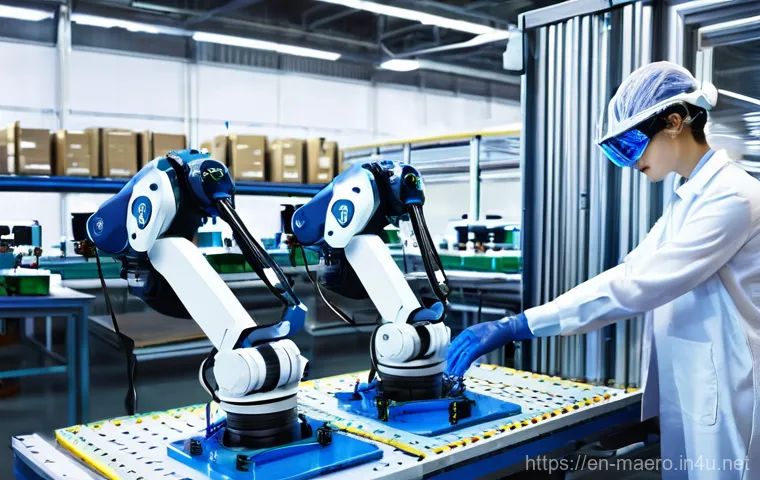
On the industrial front, the impact is even more profound. Factories are becoming incredibly intelligent, a far cry from the noisy, repetitive assembly lines of old. I’ve seen some incredible examples where AI algorithms are analyzing data from electromechanical sensors on robotic arms, conveyor belts, and CNC machines to optimize production, identify anomalies, and even predict when maintenance is needed. It’s like the machines are developing a sixth sense! This means less downtime, higher quality products, and significantly safer working environments. The shift from reactive to proactive maintenance, driven by AI, is a game-changer. My friend, who manages a manufacturing plant, recently implemented an AI system that monitors the vibration patterns of their electromechanical presses. He told me it caught a bearing failure weeks before it would have caused a catastrophic breakdown, saving them hundreds of thousands in potential losses. This is the real power of AI and electromechanics working hand-in-hand.
Tiny Wonders, Grand Impact: The Miniaturization Revolution
Have you ever held a modern smartphone and just marveled at the sheer amount of technology packed into such a slim device? It’s truly mind-boggling, right? This incredible feat is largely thanks to the relentless pursuit of miniaturization in electromechanical systems. We’re talking about components that are literally microscopic, yet perform critical functions with astounding precision. Think about the camera modules in your phone, with tiny lenses and stabilization mechanisms, or the haptic feedback motors that give you that satisfying ‘buzz’. I remember when cell phones were bricks, and now they’re sleeker than ever, all while doing a million more things. This isn’t just about making things smaller for the sake of it; it’s about enabling entirely new applications and making existing ones more efficient, portable, and less resource-intensive. The smaller we can make these electromechanical wonders, the more we can integrate them into our lives and environments without them being intrusive. It feels like we’re living in a sci-fi movie where everything just keeps shrinking!
Wearable Tech and Medical Miracles
This drive for miniaturization is unlocking some truly groundbreaking applications, particularly in wearable technology and medicine. Think about smartwatches that monitor your heart rate, track your steps, and even perform ECGs – all thanks to incredibly tiny sensors and electromechanical components. And in the medical field, it’s nothing short of miraculous. Micro-robots designed for targeted drug delivery or minimally invasive surgery are no longer just concepts; they’re becoming a reality. Imagine a tiny camera, guided by electromechanical actuators, exploring the inside of your body to diagnose issues without major surgery. I’ve read about incredible advancements where tiny pumps deliver precise doses of insulin to diabetics, completely autonomously. These are life-changing innovations, making healthcare less invasive and more personalized, all powered by the continuous miniaturization of electromechanical marvels. It’s a testament to human ingenuity.
Enabling the Edge: Small Scale, Big Data
Miniaturization also plays a pivotal role in what we call “edge computing” and pervasive sensing. Smaller electromechanical sensors, embedded in everything from bridges to individual factory machines, can collect vast amounts of data in real-time. This means we can monitor environmental conditions, structural integrity, or equipment performance with unprecedented detail. The ability to deploy these tiny, low-power devices in remote or previously inaccessible locations opens up a world of possibilities for data collection and analysis. It’s like giving everything a nervous system. For instance, tiny MEMS (Micro-Electro-Mechanical Systems) sensors are now in almost everything – from your car’s airbags to your phone’s gyroscope. These miniature marvels are the unsung heroes of the data revolution, providing the raw input that powers AI and IoT at the very edge of our networks. This constant flow of information helps us make smarter decisions faster.
Greener Gears: Electromechanical Systems for a Sustainable Future
If there’s one area where I get particularly excited about the future of electromechanical systems, it’s their pivotal role in driving sustainability. Honestly, it feels like we’re finally getting serious about tackling climate change, and these systems are at the very heart of that effort. We’re talking about everything from renewable energy generation to electric vehicles and smart grids. The transition from fossil fuels to clean energy wouldn’t be possible without highly efficient electromechanical generators converting wind and solar power into electricity, or without advanced motor designs that make electric cars a viable, powerful alternative. I’ve personally been transitioning my home to be more energy-efficient, and every step, from choosing an energy-star rated appliance to researching solar panels, involves understanding the electromechanical innovations behind them. It’s not just about doing good; it’s about smart engineering choices that also happen to be good for the planet. This focus on efficiency and regeneration is incredibly inspiring.
Revolutionizing Energy Generation and Storage
The renewable energy sector is brimming with electromechanical innovation. Massive wind turbines, with their sophisticated pitch control systems and high-efficiency generators, are electromechanical marvels. Solar panel tracking systems, using precision motors and sensors to follow the sun, maximize energy capture. And let’s not forget the crucial role of electromechanical components in battery storage systems, managing the charge and discharge cycles of the massive batteries needed to stabilize our grids. It’s fascinating how these systems are continuously being optimized for greater output and reliability. I recently read about new turbine designs that are using magnetic levitation to reduce friction and increase efficiency, pushing the boundaries of what’s possible in clean energy production. These advancements are critical for a future powered by clean, sustainable sources, moving us away from our reliance on finite resources.
Electrification of Transport: EVs and Beyond
The automotive industry is in the midst of a monumental shift, and electromechanical systems are the stars of the show. Electric vehicles (EVs) are no longer a niche market; they’re becoming mainstream, and their propulsion systems are pure electromechanical genius. Powerful electric motors, sophisticated battery management systems, and regenerative braking mechanisms all fall under this umbrella. It’s not just cars either; electric buses, trains, and even increasingly, aircraft are embracing electromechanical powertrains. I recently test-drove an EV, and the instant torque and smooth acceleration were genuinely impressive – a direct result of these advanced systems. It feels like we’re on the cusp of a transportation revolution that will dramatically reduce emissions and noise pollution, making our cities cleaner and quieter. This widespread electrification, driven by electromechanical breakthroughs, is truly an exciting frontier for a sustainable planet.
Driving Forward: Electromechanics in the Automotive World

When you think about the evolution of automobiles, it’s impossible to overlook the profound impact of electromechanical systems. We’ve moved so far beyond simple internal combustion engines with mechanical linkages. Today’s cars are incredibly complex machines, packed with sensors, actuators, and motors that manage everything from your engine’s performance to your braking system and even the comfort of your seat. For me, it’s the quiet revolution happening under the hood – or rather, throughout the entire vehicle – that is truly fascinating. My first car felt like a simple mechanical beast; my current one is a symphony of integrated electronic and mechanical components. This transition has led to enhanced safety, incredible fuel efficiency, and a driving experience that’s smoother and more connected than ever before. It’s a testament to how electromechanical engineering continuously pushes the boundaries of what’s possible on the road, making every journey safer and more enjoyable.
From Power Windows to Advanced Driver-Assistance Systems (ADAS)
Think about the sheer number of electromechanical components in a modern car. It’s staggering! Power windows, electric seats, power steering, anti-lock braking systems (ABS), electronic stability control (ESC) – each of these relies on precise electromechanical integration. And now, we’re deep into the era of Advanced Driver-Assistance Systems (ADAS). Features like adaptive cruise control, lane-keeping assist, and automatic emergency braking all utilize a sophisticated array of electromechanical sensors (radar, lidar, cameras) coupled with actuators to take corrective actions. I’ve personally experienced the peace of mind that comes with these systems; that little nudge from the lane-keeping assist on a long drive can be a real lifesaver. These aren’t just luxury add-ons anymore; they’re becoming standard safety features, making our roads dramatically safer and paving the way for fully autonomous vehicles. It’s truly a blend of mechanical prowess and electronic intelligence.
The Electric Vehicle Revolution: More Than Just a Battery
Of course, the most significant shift in automotive electromechanics is the rise of the Electric Vehicle (EV). EVs are fundamentally electromechanical systems. Their powerful electric motors, often integrated directly into the wheels or axles, replace the complex internal combustion engine and transmission. The sophisticated battery management systems (BMS), which are crucial for safety and efficiency, are electromechanical marvels themselves. Regenerative braking, where the electric motor acts as a generator to recharge the battery, is another brilliant electromechanical innovation. The transition isn’t just about swapping a gas tank for a battery; it’s a complete rethinking of vehicle architecture, leading to quieter, more responsive, and significantly more sustainable transportation. I truly believe this is where the automotive industry is headed, and electromechanical engineers are leading the charge.
Beyond the Assembly Line: The Rise of Collaborative Robotics
The image of robots in factories has often been one of powerful, dangerous machines confined behind safety cages, performing repetitive tasks with unthinking precision. But that paradigm is rapidly changing, thanks to incredible advancements in electromechanical design and control systems. We’re now entering the era of collaborative robots, or “cobots,” which are designed to work safely alongside humans, augmenting our abilities rather than just replacing them. This is a huge shift, and honestly, it’s one that deeply excites me. I’ve seen videos of cobots performing intricate tasks like assembling small electronics right next to human workers, and it’s truly a marvel of engineering. These robots use highly sensitive electromechanical sensors and actuators to understand their environment, detect human presence, and adjust their movements to ensure safety. It transforms the factory floor into a more dynamic, flexible, and human-centric environment, which I think is a fantastic development.
Working Hand-in-Hand: Human-Robot Collaboration
The beauty of cobots lies in their ability to combine the strengths of humans – problem-solving, adaptability, fine motor skills for delicate tasks – with the strengths of robots – precision, strength, and tireless repetition. Imagine a human worker performing a complex assembly, while a cobot next to them precisely presents the next component, or holds a heavy part steady. This kind of synergy is made possible by sophisticated electromechanical design that allows for gentle, precise movements and force-sensing capabilities. The robots can ‘feel’ when they encounter an obstacle or if a human is in their path, allowing them to stop or adjust. It’s a completely different interaction model, moving from antagonism to partnership. I find this aspect particularly compelling, as it suggests a future where technology empowers workers rather than displaces them entirely, leading to more productive and safer workspaces.
Flexible Manufacturing and Rapid Prototyping
Another major advantage of these advanced electromechanical robots is the flexibility they bring to manufacturing. Traditional industrial robots often require extensive programming and setup for each new task, making them less suitable for short production runs or highly customized products. Cobots, with their easier programming interfaces and adaptability, can be quickly reconfigured for different jobs. This is a game-changer for small and medium-sized businesses that need to be agile and responsive to market demands. It also democratizes access to automation, allowing more companies to leverage robotic assistance without massive upfront investments in complex infrastructure. For anyone involved in manufacturing or product design, the ability to rapidly prototype and adapt production lines using these flexible electromechanical systems is incredibly valuable, driving innovation at a much faster pace.
Keeping Things Running Smoothly: The Predictive Maintenance Revolution
One of the quiet heroes in the world of electromechanical systems, and frankly, one that saves industries countless millions, is the rise of predictive maintenance. Gone are the days of waiting for a machine to break down completely before fixing it, or adhering rigidly to a time-based maintenance schedule that might be overkill (or not enough!). We’re now in an era where intelligent electromechanical sensors, coupled with AI and data analytics, can actually *predict* when a component is likely to fail. This is a huge shift, and from my own experience dealing with unexpected appliance failures at home, I can tell you that preventing a problem before it even occurs is a game-changer. It’s like having a crystal ball for your machinery. This proactive approach minimizes downtime, extends the lifespan of equipment, and significantly reduces operational costs. It feels like we’ve finally unlocked the secret to eternal machine youth!
Sensors and Smart Monitoring
The backbone of predictive maintenance is a sophisticated network of electromechanical sensors. These aren’t just your run-of-the-mill thermometers; we’re talking about vibration sensors that can detect minute changes in machine patterns, acoustic sensors that pick up unusual noises, thermal cameras that spot overheating components, and current sensors that monitor power consumption for anomalies. Each piece of electromechanical equipment, from a simple pump to a complex robotic arm, can be outfitted with these watchful eyes and ears. The data they collect – thousands of data points per second – is then fed into advanced algorithms that learn the ‘normal’ operating profile of the machine. Any deviation from this baseline triggers an alert, allowing maintenance teams to intervene *before* a small issue escalates into a catastrophic failure. It’s a truly brilliant application of electromechanical intelligence to real-world problems.
From Reactive to Proactive: The Maintenance Paradigm Shift
This approach marks a fundamental paradigm shift from traditional maintenance strategies. Historically, maintenance was either reactive (fix it when it breaks, which is costly and disruptive) or preventive (fix it on a schedule, which can be inefficient). Predictive maintenance, however, is about intelligent intervention. By accurately forecasting potential failures, companies can schedule maintenance precisely when it’s needed, minimizing disruption to production. Imagine a factory where a critical electromechanical motor is flagged for an upcoming bearing failure, allowing engineers to order the part and schedule its replacement during a planned shutdown, instead of having the entire line grind to a halt unexpectedly. I’ve heard countless stories from industry professionals about how this has transformed their operations, making them far more reliable and cost-effective. It truly showcases how smart electromechanical systems are making operations incredibly robust.
| Trend Category | Key Electromechanical Innovations | Real-World Impact & Benefits |
|---|---|---|
| Smart Automation & IoT |
|
|
| Miniaturization |
|
|
| Sustainable Solutions |
|
|
| AI & Robotics Integration |
|
|
Wrapping Things Up
Wow, what a journey we’ve had, diving deep into the fascinating world of electromechanical systems! It’s truly incredible to think about how these silent powerhouses are not just shaping our present but actively designing our future. From the smallest wearable gadget to the largest industrial robots, the seamless interplay of electricity and mechanics is making our lives smarter, more efficient, and increasingly sustainable. I hope you’ve enjoyed exploring these cutting-edge advancements as much as I have, and that you now see the world around you with a fresh appreciation for the ingenious engineering at work. Keep your eyes peeled, because the next big breakthrough is always just around the corner!
Useful Insights to Keep in Mind
1. Career Opportunities are Booming: If you’re looking for a dynamic field, electromechanical engineering is incredibly vibrant. With the constant integration of AI, IoT, and robotics, the demand for skilled professionals who understand both the electrical and mechanical aspects of these systems is only going to grow. It’s a fantastic area for innovation and problem-solving, and a truly rewarding path for anyone with a curious mind and a passion for making things work better.
2. Make Smart Home Choices: When you’re upgrading your home appliances or setting up a smart home system, pay attention to the underlying electromechanical design. Energy-efficient motors, intelligent sensors, and robust actuators contribute not only to convenience but also to lower utility bills and a smaller environmental footprint. Doing a little research can really pay off in the long run, transforming your living space into a truly intelligent environment.
3. Embrace Sustainable Tech: Electromechanical systems are at the heart of our shift towards a greener planet. Whether you’re considering an electric vehicle, installing solar panels, or simply choosing energy-star rated electronics, you’re directly supporting advancements in electromechanical efficiency. Every choice we make that leans into these sustainable technologies helps to build a more resilient and cleaner future for everyone.
4. A Little Knowledge Goes a Long Way: Understanding the basic principles of electromechanical systems can empower you in surprising ways. From troubleshooting a quirky gadget to understanding how your car’s advanced safety features work, this knowledge demystifies the tech around us. It fosters a deeper appreciation for the engineering marvels we interact with daily and can even save you time and money by recognizing minor issues before they become major problems.
5. Stay Curious and Keep Learning: The pace of innovation in electromechanics is breathtaking. What’s cutting-edge today might be standard tomorrow. Continuously learning about new materials, control algorithms, and applications will keep you at the forefront of understanding how our world is evolving. Subscribing to tech blogs (like this one!), watching documentaries, and exploring new products are great ways to stay informed and inspired by these incredible advancements.
Key Takeaways
Electromechanical systems are the invisible backbone of our modern world, seamlessly blending electrical and mechanical engineering to power everything from our personal devices to vast industrial complexes. Their continuous evolution, driven by advancements in AI, IoT, and miniaturization, is creating smarter homes, more efficient factories, and groundbreaking medical solutions. Crucially, these systems are also pivotal in developing sustainable energy solutions and revolutionizing transportation. By embracing collaborative robotics and predictive maintenance, industries are becoming safer and more productive. It’s clear that the future will be increasingly defined by these ingenious combinations of intelligence and motion, making our world more connected, efficient, and innovative.
Frequently Asked Questions (FAQ) 📖
Q: How are electromechanical systems evolving beyond traditional roles, especially with new technologies like
A: I and IoT? A1: Oh, this is such a fantastic question and honestly, it’s where things get really exciting! If you’re thinking about electromechanical systems as just motors and levers, you’re missing out on the incredible revolution happening right now.
From what I’ve personally seen and experienced, we’re moving light-years beyond that. Think about how your smart home devices seamlessly integrate – that’s electromechanical brilliance powered by the Internet of Things (IoT).
When your smart thermostat adjusts the temperature before you even walk through the door, or your robot vacuum navigates your living room like a pro, it’s a symphony of electrical signals controlling mechanical actions, all made intelligent by IoT sensors and connectivity.
And AI? It’s like pouring rocket fuel on the whole process! I’ve been following some fascinating developments in manufacturing, where AI is literally teaching machines to learn from their operations.
This isn’t just about automation anymore; it’s about predictive maintenance, where a machine can anticipate a failure before it happens, scheduling its own repairs.
Imagine an assembly line where robots can adapt to slight variations in materials or even optimize their own movements for efficiency. It’s truly mind-blowing!
This means less downtime, higher quality, and a complete transformation of industries like automotive and aerospace. We’re talking about machines that can make intelligent decisions, constantly improving their performance.
It really feels like the line between electrical brains and mechanical brawn is blurring in the most incredible ways. It’s not just an upgrade; it’s a complete reimagining of what’s possible.
Q: What are some tangible, real-world examples of these advanced electromechanical systems impacting our daily lives and major industries right now?
A: Absolutely, this is where the rubber meets the road, right? It’s one thing to talk about concepts, but seeing them in action is what makes it so relatable.
From my perspective, these aren’t futuristic fantasies; they’re woven into the fabric of our everyday lives. Take your morning commute, for instance. Modern electric vehicles aren’t just battery-powered; they’re intricate electromechanical marvels.
The regenerative braking systems, the precision steering, the intelligent cruise control – these are all testaments to advanced electromechanics working silently to make your drive safer and more efficient.
I remember test-driving one for the first time, and the seamless transition between electric and mechanical power felt like pure magic. Beyond personal transport, think about our energy infrastructure.
Renewable energy sources like wind turbines and solar tracking systems are gigantic electromechanical operations. They’re constantly adjusting, optimizing their position to capture the maximum energy, and seamlessly integrating into the grid.
It’s truly inspiring to see how these systems are helping us move towards a more sustainable future. And in industries, it’s even more dramatic. In healthcare, robotic surgery systems allow for incredible precision, performing operations that were once unimaginable.
Logistics and warehousing have been revolutionized by automated guided vehicles (AGVs) that zip around, moving goods with astounding speed and accuracy.
Honestly, every time I see these systems at work, whether it’s a factory floor or a hospital, I get this rush of excitement about how much human ingenuity is packed into these machines.
They’re not just tools; they’re partners in progress.
Q: What does the future hold for electromechanical systems, and how can someone interested in this field get involved or stay ahead?
A: Oh, the future of electromechanical systems is boundless, and that’s what makes it such an invigorating space to be in! If you ask me, we’re only just scratching the surface of what’s possible.
What excites me most is the continued push towards miniaturization – imagine even tinier robots that can perform complex tasks, or micro-electromechanical systems (MEMS) embedded in everything from our smartwatches to medical implants, monitoring our health with unparalleled accuracy.
We’re also going to see even more seamless integration of AI, leading to truly autonomous systems that can operate with minimal human intervention, especially in dangerous or remote environments.
Think about advanced robotics not just in factories, but in exploring space or deep-sea environments. The possibilities truly boggle the mind! For anyone feeling a pull towards this fascinating field, whether you’re a student, a budding engineer, or just someone with a keen interest, there are so many ways to get involved.
My top advice? Start exploring! Online courses, open-source robotics projects, even tinkering with Arduino or Raspberry Pi kits – these are fantastic hands-on ways to grasp the fundamentals.
Look for university programs or vocational training that focus on mechatronics, robotics, or embedded systems. Don’t be afraid to network with professionals in the field; conferences and industry meetups are goldmines for insights and connections.
I’ve found that staying curious and constantly learning are your best assets. This field is dynamic, so keeping up with new research and technological breakthroughs is key.
The future is literally being built by these systems, and being a part of that journey is incredibly rewarding.