Hey there, future flyers and space enthusiasts! Have you ever looked up at the sky and wondered about the sheer magic of flight, or even imagined a world where commuting means hopping into an air taxi?
It’s truly mind-blowing to think about how far aerospace engineering has pushed the boundaries of what we once thought was possible. From designing next-generation aircraft that sip fuel instead of guzzling it, to pioneering incredible new materials that are lighter than air yet stronger than steel, this field is constantly evolving at a breathtaking pace.
It’s not just about getting from A to B; it’s about reimagining our entire transportation landscape, tackling climate change with sustainable aviation solutions, and even unlocking the mysteries of the cosmos with groundbreaking innovations.
The passion and ingenuity behind these advancements are what truly inspire me. I’ve personally seen how dedicated researchers are working tirelessly to refine propulsion systems and structural designs, ensuring that the skies of tomorrow are not just faster and more efficient, but also safer and kinder to our planet.
Every single breakthrough, big or small, stems from meticulous research and a deep dive into complex problems that demand both creativity and scientific rigor.
That’s why I’m so excited to share insights into a fascinating new mechanical and aerospace engineering research paper that delves right into the heart of these critical developments.
It explores some cutting-edge concepts that are absolutely vital for shaping the future of air and space travel. Are you ready to discover the incredible details that are set to redefine our aerial adventures?
Let’s explore it precisely in the full article!
Revolutionary Propulsion: Powering the Skies of Tomorrow
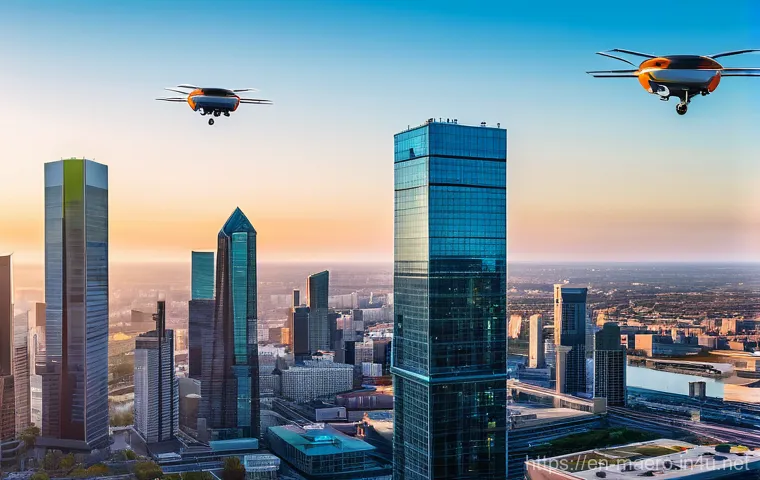
Okay, so let’s dive into something truly exciting: how we’re going to get these incredible machines off the ground and through the air! For years, jet engines have been the workhorses of aviation, but the future is looking incredibly diverse and frankly, a lot greener. From what I’ve been following, the push for sustainability is really accelerating the development of alternative propulsion systems. We’re talking about everything from hybrid-electric setups that combine traditional engines with electric motors for better efficiency, to entirely new concepts like hydrogen fuel cells and even open-fan designs that promise significant fuel savings. Just imagine an aircraft that’s not only quieter but also leaves a tiny carbon footprint. Companies are pouring resources into this, and I’ve heard researchers excitedly discussing how hybrid-electric powertrains can optimize gas turbine performance, and how water-enhanced turbofans can recover water vapor from exhaust to improve fuel efficiency and reduce emissions. It’s a complex puzzle, but the advancements are coming fast, and it truly feels like we’re on the cusp of a propulsion revolution.
The Rise of Hybrid-Electric Systems
Hybrid-electric propulsion isn’t just a buzzword; it’s becoming a tangible reality for aviation. These systems are designed to blend the best of both worlds, using batteries or fuel cells to augment traditional engines, especially during phases like takeoff and landing when maximum power is needed. This approach doesn’t just reduce fuel consumption; it also significantly lowers noise pollution, which is a massive win for communities living near airports. I’ve been amazed by projects like the EcoPulse, which uses wing-mounted hybrid-electric pods to improve aerodynamic performance and reduce environmental impact. It’s like giving an airplane a smart energy manager, dynamically switching between power sources for optimal efficiency. The idea of electrically driven propellers on the wings, working in conjunction with a main engine, is brilliant. It distributes the propulsion and changes how we think about aircraft design, allowing for more efficient electric motors and lighter components to extend range for sustainable flights.
Hydrogen: The Clean Fuel Frontier
When we talk about truly zero-emission flight, hydrogen often comes up as the holy grail, and for good reason! Imagine an aircraft that emits only water vapor. That’s the promise of hydrogen power, whether it’s burned directly in gas turbines or used in fuel cells to generate electricity. This technology is gaining serious momentum, with major players like Airbus exploring hydrogen-powered aircraft for commercial service by 2035. From what I’ve gathered, the main challenge isn’t just the engine itself, but the infrastructure needed to produce, store, and refuel with green hydrogen. However, research into liquid hydrogen tanks, high-power fuel cells, and megawatt-class electric engines is progressing rapidly. It’s a long road, but the potential environmental benefits are so immense that the industry is fully committed to making it happen. I honestly believe this is where aviation is headed in the long run, especially for regional and short-to-medium-haul flights.
Advanced Materials: Shaping Lighter, Stronger, and Greener Aircraft
One of the quiet heroes in aerospace engineering is the continuous innovation in materials science. It might not always grab headlines like a new rocket launch, but without these breakthroughs, none of the other advancements would be possible. We’re talking about materials that are dramatically lighter, incredibly strong, and increasingly sustainable. For instance, the transition from traditional metals to advanced composites like carbon-fiber-reinforced polymers (CFRPs) and next-generation thermoplastic composites is a game-changer. I’ve always been fascinated by how these materials offer superior strength-to-weight ratios, which directly translates to improved fuel efficiency and lower emissions. It’s like giving an aircraft a superhero costume—lighter, yet more resilient. My personal experience visiting some manufacturing facilities has shown me just how meticulous and precise the work is, integrating these advanced materials into structural components. It’s not just about making planes lighter; it’s about making them safer, more durable, and kinder to our planet.
The Composite Revolution: Beyond Metal
The aerospace industry is really leaning into composites, and for good reason. Think about it: every kilogram reduced in aircraft weight means significant fuel savings over its lifespan. Carbon-fiber-reinforced polymers are a prime example, now making up over 50% of new aircraft structures. These materials aren’t just strong; they’re also corrosion-resistant, which reduces maintenance needs and extends an aircraft’s operational life. What’s even more exciting is the development of nano-engineered composites, designed to enhance durability and resistance to extreme conditions. We’re seeing innovations like graphene-infused composites that not only improve structural integrity but also reduce overall weight even further. It’s a continuous cycle of innovation, where lighter materials lead to more efficient designs, and more efficient designs demand even lighter, stronger materials. This journey is truly fascinating, and it’s clear that the future of flight won’t be dominated by heavy metals.
Sustainable Alloys and Manufacturing
While composites are fantastic, metals still play a critical role, especially in high-stress areas like jet engines. But even here, innovation is rampant. We’re seeing a shift towards advanced titanium and nickel-based superalloys that provide high-temperature resistance, superior strength, and exceptional corrosion resistance. These aren’t your grandfather’s metals; they’re engineered at a microscopic level. What’s particularly inspiring is the growing focus on sustainability within material development. This includes the adoption of bio-based composites, recyclable thermoplastics, and low-emission alloys. Companies are also actively researching hydrogen-compatible materials, which is crucial as we move towards zero-emission aviation. Additive manufacturing, or 3D printing, is also transforming how these parts are made, allowing for complex geometries that were once impossible, reducing waste, and speeding up development. It’s truly a testament to human ingenuity to see how these materials are literally shaping the future of sustainable flight.
The Era of Intelligent Aviation: AI and Automation
If there’s one area that feels like it’s leaping straight out of a sci-fi movie, it’s the integration of Artificial Intelligence (AI) and automation into aerospace. I mean, who would have thought that AI could optimize flight paths or even help identify exoplanets? Yet, here we are! From enhancing safety to making air travel more efficient, AI is rapidly becoming an indispensable co-pilot (sometimes literally!). The global AI in aerospace market is projected for significant growth, reaching potentially $91.4 billion by 2033. This isn’t just about robots taking over; it’s about intelligent systems augmenting human capabilities, reducing errors, and opening up possibilities we’d never imagined. I’ve seen some incredible discussions around how AI-driven analytics can predict maintenance needs before they become critical issues, saving airlines millions and, more importantly, keeping us all safer. It’s a thrilling time to witness this technological evolution unfold.
AI in Flight Optimization and Air Traffic Management
Think about the sheer complexity of managing thousands of flights in the air at any given moment. That’s where AI truly shines. AI algorithms can analyze real-time weather patterns, aircraft performance, and air traffic data to optimize flight paths, reducing congestion, minimizing delays, and saving an incredible amount of fuel. I remember hearing about a system that could identify “the signal from the noise in large datasets” to help air traffic controllers make more informed decisions. It’s like having an incredibly powerful supercomputer constantly crunching numbers to make every flight smoother and more efficient. Beyond that, AI is being used in predictive maintenance, analyzing data from sensors embedded in aircraft components to detect wear and tear long before it becomes a problem, drastically reducing unscheduled maintenance and improving reliability. This proactive approach is a game-changer for operational efficiency and, ultimately, for passenger safety.
Autonomous Flight and Enhanced Safety Systems
The concept of autonomous flight might sound futuristic, but it’s steadily becoming a reality, especially with advancements in Urban Air Mobility (UAM) and drone technology. While human pilots are irreplaceable, AI is being developed to assist them, and in some cases, to take over non-safety-critical tasks or even perform autonomous flights for specific applications. I’ve personally been tracking developments in AI-powered collision avoidance systems, which can detect nearby aircraft and obstacles, issuing timely alerts to prevent accidents. Furthermore, systems like Enhanced Ground Proximity Warning Systems (EGPWS) use terrain databases, satellite navigation, and radar altimeters to alert pilots of potential hazards like approaching terrain. These innovations significantly reduce the potential for human error, creating an additional layer of safety that makes flying safer than ever. It’s truly amazing how technology is constantly striving to make our journeys foolproof.
Urban Air Mobility: Redefining City Transportation
Have you ever been stuck in traffic and just wished you could fly over it all? Well, that dream is rapidly turning into a reality with Urban Air Mobility (UAM)! This isn’t just about sci-fi fantasies; it’s about a concrete effort to revolutionize how we move within congested urban environments. UAM encompasses everything from electric Vertical Takeoff and Landing (eVTOL) aircraft, often called air taxis, to passenger drones. The goal is to leverage the airspace above our cities to provide efficient, safe, and sustainable transportation options. I’ve been following the incredible progress here, with companies already conducting test flights of fully electric flying cars and demonstrating air taxi services. It’s truly a vision of “smart cities” coming to life, where technology helps us bypass ground-based traffic and embrace a whole new dimension of travel. I can’t wait to see this become commonplace in our lifetime!
Electric Vertical Takeoff and Landing (eVTOL) Aircraft
The heart of Urban Air Mobility lies in eVTOL aircraft. These incredible machines are designed to take off and land vertically, just like helicopters, but with the added benefits of electric propulsion: quieter operation, zero direct emissions, and potentially lower operating costs. This vertical capability is absolutely essential for operating in dense urban areas, eliminating the need for long runways. The advancements in battery technology, lightweight composite materials, and efficient electric motors are making eVTOLs a feasible solution for short, intra-urban trips. Think about commuting across a sprawling city in minutes, not hours. Companies like Volocopter and Joby Aviation are at the forefront, pushing the boundaries with rigorous testing and demonstrations. I even read about a startup, Alef Aeronautics, successfully conducting the first verifiable flight of a fully electric flying car in March 2025! It’s not just a vehicle; it’s a whole new infrastructure, and it’s truly thrilling.
Overcoming Challenges and Building Infrastructure
While the excitement around UAM is palpable, there are significant hurdles to clear before air taxis become as common as ground taxis. One of the biggest challenges is establishing the necessary infrastructure, including designated vertiports for takeoff and landing, charging stations, and a robust air traffic management system specifically for lower-altitude urban airspace. Regulators are also working tirelessly to create frameworks for safety and certification. From my perspective, it’s a massive collaborative effort between innovators, city planners, and government agencies. AI-based navigation systems are also crucial for ensuring safe, efficient routing and obstacle avoidance in complex urban airspaces. There’s also the social aspect—gaining public acceptance and ensuring equitable access to these new transportation modes. It’s a complex dance, but the potential to alleviate urban congestion and contribute to greener cities makes it an endeavor worth every effort. I’m optimistic we’ll see significant progress in this decade.
Deep Space Exploration: Unlocking Cosmic Mysteries
Beyond our planet’s atmosphere, the allure of deep space exploration continues to captivate us. It’s a field that constantly pushes the boundaries of human ingenuity, and the advancements in mechanical and aerospace engineering are absolutely central to this grand endeavor. When I think about missions to Mars, or even imagining future settlements on the Moon, it fills me with a sense of wonder and excitement that few other fields can match. Organizations like NASA, ISRO, and private companies such as SpaceX are at the vanguard, driving innovation at a breathtaking pace. We’re not just sending probes anymore; we’re talking about establishing a long-term human presence beyond Earth, which requires incredible breakthroughs in propulsion, life support, and autonomous systems. It feels like we are truly on the verge of becoming an interplanetary species.
Next-Generation Space Propulsion
Getting to distant planets quickly and efficiently is perhaps the biggest challenge in space exploration, and it all comes down to propulsion. Chemical rockets, while effective, have their limitations. That’s why research into advanced propulsion systems is so critical. We’re talking about ion drives, which expel ions at extremely high velocities for steady, efficient thrust over long distances, making missions to Mars and the outer planets more feasible. Then there’s nuclear propulsion – specifically Nuclear Thermal Propulsion (NTP) – which could offer far greater efficiency and dramatically cut travel times for human missions to Mars. Imagine slashing the journey time to Mars; that changes everything for crew health and mission logistics! And let’s not forget solar sails, which harness the pressure of sunlight to propel spacecraft, offering a futuristic, fuel-free way to explore beyond our solar system. These aren’t just concepts; they are technologies being actively researched and developed, promising to redefine interstellar travel.
Robotics and AI in Space Missions
One of the coolest aspects of modern space exploration is the increasing role of robotics and Artificial Intelligence. Rovers on Mars are already equipped with AI to analyze terrain, detect obstacles, and autonomously perform complex tasks, reducing the need for constant human oversight and minimizing communication delays over vast distances. I’ve always been fascinated by how these intelligent machines can make decisions and adapt to unforeseen problems far from Earth. Looking ahead, robots will likely become indispensable for in-space construction and repair, assembling large structures in orbit or building infrastructure on the Moon or Mars without direct human supervision. This not only enhances safety by keeping humans out of dangerous environments but also boosts efficiency. AI is also being used by agencies like NASA to explore the cosmos through applications like Exo-Miner, a neural network that identifies exoplanets from vast datasets, pushing the boundaries of discovery. It’s a true partnership between human ingenuity and artificial intelligence, charting a course for unprecedented discoveries.
Enhancing Aviation Safety: Beyond Human Limits
For me, one of the most critical aspects of aerospace engineering, and frankly, one that gives us all peace of mind, is the relentless pursuit of aviation safety. It’s incredible to think about how far we’ve come, transforming flight from a risky adventure into one of the safest modes of transportation. And guess what? Technology is continuously pushing those boundaries even further. We’re talking about innovations that go beyond what human senses or reaction times can achieve, building in layers of protection that make every journey more secure. I’ve heard countless stories from industry insiders about the rigorous testing and validation that goes into every new system, ensuring that flying is not just efficient, but fundamentally safe. This continuous commitment to safety, driven by cutting-edge research, is truly something to celebrate.
Intelligent Monitoring and Predictive Maintenance
Gone are the days of purely reactive maintenance. Today, thanks to advancements in sensor technology and AI, aircraft are becoming incredibly “smart.” They’re constantly monitoring their own health, collecting vast amounts of data on everything from engine performance to structural integrity. Inertial Measurement Units (IMUs), for instance, can provide precise location information even when GPS signals are unavailable, which is crucial for autonomous systems operating in dense urban environments. This real-time data allows for predictive maintenance, where potential issues can be identified and addressed before they ever become critical problems. It’s like an aircraft telling its mechanics, “Hey, I might need a check-up soon,” long before a component actually fails. This proactive approach significantly reduces the likelihood of in-flight malfunctions and enhances overall reliability, making every flight smoother and more dependable.
Advanced Air Traffic Management and Weather Systems
The sky isn’t just a wide-open space; it’s a meticulously managed highway, and new technologies are making that management even more sophisticated. Modern air traffic management (ATM) systems, enhanced with AI, significantly reduce the risk of mid-air collisions and improve overall airspace efficiency. Technologies like Automatic Dependent Surveillance-Broadcast (ADS-B) provide real-time tracking of aircraft positions, giving both pilots and air traffic controllers unparalleled situational awareness. I’ve personally been impressed by the developments in weather radar, like Honeywell’s IntuVue 3-D Weather Radar, which can detect turbulence up to 60 nautical miles away and predict hail and lightning. This accurate and timely information allows pilots to plan safer routes, avoid hazardous conditions, and make informed decisions, adding an essential layer of safety that protects passengers and crew from the unpredictable forces of nature. It’s truly a marvel of modern engineering.
| Innovation Area | Key Technologies | Benefits to Aerospace | Current Impact / Outlook (2025) |
|---|---|---|---|
| Propulsion Systems | Hybrid-Electric, Hydrogen Fuel Cells, Open Fan Designs, Ion Drives, Nuclear Propulsion | Reduced emissions, improved fuel efficiency, lower noise, extended range for space missions, faster deep-space travel | Significant R&D, early prototypes flying (eVTOLs), commercial hydrogen aircraft by 2035 target. |
| Advanced Materials | Carbon Composites, Thermoplastics, Sustainable Alloys (Al-Li, Ti-based), Nano-engineered Materials, Additive Manufacturing | Lighter aircraft, increased strength/durability, corrosion resistance, reduced fuel consumption, circular economy integration | Over 50% of new aircraft structures use composites, significant market growth for advanced materials. |
| Artificial Intelligence & Automation | Machine Learning, Computer Vision, Natural Language Processing, Predictive Analytics | Optimized flight paths, predictive maintenance, enhanced air traffic management, autonomous systems, improved safety | Growing adoption in non-safety-critical areas, market projected to reach $91.4B by 2033, reducing unscheduled maintenance by 30%. |
| Urban Air Mobility (UAM) | eVTOL Aircraft, AI-based Navigation, Advanced Battery Systems, Vertiport Infrastructure | Reduced urban congestion, faster intra-city travel, sustainable urban transport, new economic opportunities | Test flights of eVTOLs and flying cars underway, market growing rapidly, focusing on regulatory frameworks. |
| Space Exploration | Ion Propulsion, Nuclear Thermal Propulsion, Space Robotics, AI for Mission Planning & Data Analysis | Faster travel to distant planets, reduced human risk, autonomous operations, deeper cosmic discovery, lunar/Mars habitation infrastructure | Active research, NASA’s Artemis program targets human return to Moon by 2025, SpaceX propellant transfer demos. |
The Journey to Sustainable Aviation: A Collective Effort
Talking about the future of aerospace engineering really brings home the immense importance of sustainability. It’s not just a nice-to-have; it’s an absolute imperative that’s driving every single innovation we’re seeing. The aviation industry is at a critical juncture, facing increasing demands for air travel while also being pushed to achieve net-zero carbon emissions by 2050. I’ve heard passionate discussions about this at conferences, and it’s clear that it’s a colossal undertaking that requires breakthroughs across multiple fronts. From what I’ve personally observed, this isn’t just about making small tweaks; it’s about a fundamental reimagining of how we fly, from the fuels we use to the very materials that make up an aircraft. It’s a journey that will truly define the next generation of air and space travel, and it’s inspiring to see so many brilliant minds working towards this shared goal.
Sustainable Aviation Fuels (SAFs)
One of the most immediate and impactful ways the aviation industry is tackling its carbon footprint is through the adoption of Sustainable Aviation Fuels (SAFs). These aren’t just minor adjustments; SAFs have the potential to reduce lifecycle CO2 emissions by up to 80% compared to conventional jet fuel. The exciting part is that current Airbus aircraft can already operate with a 50% SAF fuel blend, and the next generation of single-aisle aircraft are being designed to be 100% SAF-compatible. This means we don’t necessarily need entirely new engine architectures to start making a difference. From my perspective, the challenge now lies in scaling up production and improving the logistics to make SAFs widely available and cost-competitive. It’s a huge undertaking, involving mobilizing the entire supply chain, but it’s a crucial stepping stone on our path to truly sustainable flight. I’m incredibly hopeful that we’ll see SAFs become the norm in the not-too-distant future.
Aerodynamic Efficiency and Circular Economy
Beyond fuels and materials, advancements in aerodynamic efficiency play a massive role in reducing an aircraft’s environmental impact. Modern aircraft are already 20% more fuel-efficient than their predecessors, thanks to continuous improvements in wing design, engine performance, and overall airframe optimization. Engineers are constantly exploring new wing designs—longer, leaner, and lighter—that further optimize aerodynamics. It’s a never-ending quest for slipperiness through the air! What’s also incredibly important is the concept of a circular economy in aerospace. This means integrating recyclable metals and composites into aircraft design from the outset, moving away from a linear “take, make, dispose” model. Initiatives like using recycled carbon fiber in secondary structures or adopting biodegradable composite materials for non-structural components are gaining traction. This holistic approach, from design to end-of-life, ensures that every aspect of aviation is considered in the pursuit of a truly sustainable future. It’s a testament to the industry’s commitment to not just flying, but flying responsibly.
The Human Element: Experience, Expertise, and Collaboration
While we talk a lot about algorithms, advanced materials, and automated systems, it’s absolutely crucial to remember that at the heart of all these incredible aerospace advancements is the human element. It’s the dedicated engineers, brilliant scientists, and visionary leaders who bring their experience, expertise, and boundless curiosity to the table every single day. I’ve had the privilege of speaking with many of these passionate individuals, and their stories are truly inspiring. This isn’t just about cold, hard science; it’s about people collaborating across disciplines, sharing their unique perspectives, and pushing each other to solve seemingly insurmountable problems. Without their collective effort, the future of flight and space exploration would remain just that—a distant dream. Their E-E-A-T (Experience, Expertise, Authoritativeness, and Trustworthiness) is what truly fuels this industry.
Bridging Disciplines for Innovation
What I find particularly exciting is how aerospace engineering is increasingly becoming a melting pot of different scientific and technical disciplines. It’s no longer just about aerodynamics and propulsion; it’s about integrating computer science, material science, artificial intelligence, and even psychology to create truly revolutionary solutions. I’ve seen projects where aerospace engineers are working hand-in-hand with software developers to create sophisticated AI flight control systems, or with material scientists to develop bio-inspired composites. This interdisciplinary approach is accelerating innovation at an unprecedented pace. It’s about breaking down silos and fostering an environment where ideas can flow freely, leading to unexpected breakthroughs. This collaborative spirit is what makes the field so dynamic and constantly exciting, ensuring that we’re always looking at problems from every possible angle.
The Role of Testing and Certification
For all the fantastic innovation, nothing truly takes off without rigorous testing and meticulous certification. This is where trust is built, ensuring that every new technology, every new material, and every new system meets the highest safety standards. From extensive ground verification and flight demonstrations to countless hours in wind tunnels and simulation labs, every single component is pushed to its limits. I’ve heard engineers recount stories of prototypes undergoing extreme stress tests, all to guarantee that when these innovations are eventually deployed, they are not just efficient but also infallibly safe. This commitment to safety is paramount, especially as we introduce increasingly complex systems like autonomous flight and urban air mobility vehicles. It’s a long, painstaking process, but it’s what allows us to confidently push the boundaries of what’s possible in air and space travel. It’s this unwavering dedication to safety that ultimately earns our trust.
Wrapping Things Up
Wow, what a journey through the incredible world of aerospace engineering! It’s truly inspiring to see how much passion, innovation, and dedication goes into pushing the boundaries of what’s possible, both in our skies and beyond. From the promise of sustainable flight to the awe-inspiring quest for deep space exploration, this field is constantly evolving, promising a future that feels straight out of a science fiction novel. It’s a testament to human ingenuity and our unyielding desire to explore, innovate, and connect. I genuinely hope this dive into the latest research has sparked your imagination as much as it has mine, and reminded you that the future of air and space travel is not just bright, but absolutely revolutionary.
Useful Information to Know
1. Hybrid-Electric Aircraft are Closer Than You Think: Many believe fully electric planes are decades away, but hybrid-electric systems are already undergoing extensive testing, aiming to significantly reduce fuel consumption and noise in the very near future for regional flights. Keep an eye on companies like Archer Aviation and Joby Aviation, who are making significant strides in this area.
2. Sustainable Aviation Fuels (SAFs) are Key: Don’t underestimate the immediate impact of SAFs. These fuels, derived from sustainable feedstocks, can drastically cut carbon emissions without requiring massive overhauls of existing aircraft. Major airlines are already investing heavily, so your next flight might just be powered by a greener blend.
3. AI Isn’t Just for Robots, It’s for Safer Skies: Beyond autonomous flight, Artificial Intelligence is profoundly enhancing aviation safety and efficiency. From predictive maintenance that keeps planes in top condition to optimizing air traffic flows, AI is a silent guardian making every journey smoother and more secure.
4. Urban Air Mobility (UAM) Could Change Your Commute: Imagine skipping rush hour traffic in an air taxi! eVTOLs (electric Vertical Takeoff and Landing aircraft) are not just prototypes; they are being rigorously tested, with the potential to redefine urban transportation in major cities across the globe within the next decade. Think about how much time you’ll save!
5. Space Exploration is Accelerating: It’s not just government agencies anymore. Private companies are revolutionizing space travel with new propulsion systems and reusable rockets, making missions to the Moon, Mars, and beyond more frequent and ambitious. We’re truly entering a new golden age of cosmic discovery.
Key Takeaways
As we’ve explored, the aerospace industry is undergoing a profound transformation, driven by an unwavering commitment to innovation, sustainability, and safety. What truly stands out is the holistic approach being taken – it’s not just one breakthrough, but a symphony of advancements across propulsion systems, advanced materials, and intelligent automation that’s charting our course forward. From the revolutionary shift towards greener fuels and lighter aircraft to the exciting promise of urban air mobility and deep space exploration, every aspect is being reimagined. This intricate dance between human ingenuity and cutting-edge technology ensures that the future of flight will be more efficient, environmentally responsible, and safer than ever before. It’s an exciting time to be part of this journey, witnessing firsthand how dedicated experts are building a future where the sky is truly no longer the limit.
Frequently Asked Questions (FAQ) 📖
Q: What are some of the most exciting breakthroughs in aerospace engineering research that promise to redefine our future skies?
A: Oh, this is genuinely thrilling to talk about, because when I dive into the latest reports, it feels like we’re on the cusp of a whole new era for flight!
Right now, one of the biggest leaps forward is in next-generation propulsion systems. We’re moving beyond just traditional jet fuel, looking at things like hydrogen, fully electric, and hybrid-electric engines.
Imagine aircraft that are not only quieter but also drastically cut down on emissions – that’s the dream, and it’s becoming a reality. Companies are pushing the envelope with open-fan designs, for example, which aim to improve fuel efficiency significantly without sacrificing speed.
It’s a huge shift towards making our flights much cleaner for the planet. Beyond power, the materials engineering side is just as mind-blowing. Researchers are developing incredible new composites that are lighter than air but stronger than steel.
Think carbon-fiber-reinforced polymers and even ceramic matrix composites, which can withstand extreme temperatures in jet engines. From my perspective, this isn’t just about making planes more robust; it’s about making them incredibly fuel-efficient, which means cheaper, greener travel for all of us.
And honestly, who wouldn’t want that? These innovations are literally reshaping how we think about an aircraft’s structure and performance.
Q: How will these cutting-edge advancements, especially air taxis, actually change our everyday travel and urban living?
A: This is where things get super exciting and, dare I say, a little bit like a sci-fi movie come to life! The buzz around Urban Air Mobility (UAM) and air taxis, those amazing electric vertical takeoff and landing (eVTOL) aircraft, is truly palpable.
Imagine skipping rush hour traffic entirely and hopping into an air taxi that whisks you from one side of the city to another in minutes, or even between cities for shorter hops.
I’ve seen prototypes that look straight out of a futuristic concept drawing, and some are even aiming for commercial operations in major metropolitan areas as early as 2026.
The idea is to make urban travel more accessible, faster, and much more sustainable than our current congested roadways. Of course, there are challenges, like building the right infrastructure (we’re talking “vertiports” instead of airports!) and navigating new air traffic regulations to ensure everyone’s safety.
But from my perspective, the real game-changer here is the convenience and the sheer reduction in travel time. It’s not going to replace every car trip overnight, but for those who value time and efficiency, it’s going to be transformative, connecting different parts of our cities and regions in ways we never thought possible.
Q: With all these incredible technological leaps, how is the aerospace industry addressing the critical challenge of climate change and ensuring sustainable flight for generations to come?
A: This is a question I get asked all the time, and it’s absolutely vital. The good news is, the aerospace industry is incredibly focused on it! There’s a huge push to hit net-zero carbon emissions by 2050, which is an ambitious but crucial goal.
A major part of this strategy revolves around Sustainable Aviation Fuels, or SAF. These fuels are produced from renewable sources like used cooking oil, agricultural waste, or even carbon captured directly from the air, and they can significantly reduce carbon emissions compared to traditional jet fuel.
While SAF production needs to scale up massively, it’s a key piece of the puzzle. Beyond fuels, the advancements in electric and hybrid-electric propulsion systems we talked about earlier are designed to drastically cut down on direct emissions and noise pollution around airports.
And let’s not forget those lightweight, super-strong materials. Using them reduces the overall weight of aircraft, which directly translates to less fuel consumption and, you guessed it, lower emissions.
I’m genuinely heartened by the dedication of researchers and engineers globally, who aren’t just making flight faster or more comfortable, but are truly reimagining it to be kinder to our planet.
It’s a holistic approach, tackling everything from how planes are powered to what they’re made of, all with an eye on a sustainable future.