Hey everyone! It’s your favorite English blog influencer here, ready to dive deep into the tech topics that truly shape our world. I’ve been spending a lot of time lately pondering how fast our digital landscape is evolving – one minute we’re marveling at 5G, and the next we’re hearing whispers of 6G and hyper-connected everything.
It really makes you stop and think about the sheer complexity and brilliance behind the scenes, doesn’t it? From the lightning-fast data streaming through your smart devices to the intricate networks keeping our cities moving, there’s an incredible story of innovation at play.
What I’ve found fascinating is how these advancements aren’t just confined to our everyday gadgets; they’re revolutionizing critical infrastructure, pushing boundaries we never thought possible.
Just imagine the sheer volume of data and the seamless communication required for, say, an aircraft soaring miles above the ground, connecting continents.
This constant evolution is something I personally get really excited about, because it touches every aspect of our lives, often in ways we don’t even fully realize.
It’s about more than just speed; it’s about reliability, security, and the incredible human ingenuity that makes it all possible. Join me as we explore these fascinating developments together, uncovering the secrets behind the tech that keeps our world connected, safe, and always moving forward.
I promise, it’s going to be an eye-opening journey! Have you ever looked up at a plane streaking across the sky and wondered what’s really going on inside?
Beyond the passengers enjoying their in-flight movies, there’s a whole universe of unseen communication happening constantly, a symphony of signals that keeps everyone safe and on schedule.
For me, it’s mind-boggling to think about the countless conversations – between pilots and air traffic control, between different aircraft, and even between the plane and ground maintenance – all occurring without a hitch.
This isn’t just about voices; it’s about critical data, weather updates, and navigational instructions being exchanged in real-time, forming the invisible lifeline of aviation.
It’s a complex dance of technology and human coordination that often goes unnoticed, but it’s absolutely vital for every single flight. Let’s peel back the layers and understand exactly how these incredible aircraft communication systems work!
Beyond the Voice: The Digital Backbone of Flight
When I first started learning about aviation, I imagined pilots chatting away on crackly radios, just like in old movies. While that’s still a crucial part of the picture, what I’ve discovered is truly mind-blowing: modern aircraft communication is so much more than just verbal exchanges.
It’s an intricate dance of digital data, constant system checks, and automated messages that ensure everything runs smoothly from takeoff to touchdown.
Think about it – every single flight is a moving data center, constantly sending and receiving critical information about its position, speed, altitude, and even engine performance.
This isn’t just for the flight crew; it’s for air traffic controllers, airline operations centers, and even ground maintenance teams. It’s a whole ecosystem designed to keep us safe, efficient, and, let’s be honest, entertained with Wi-Fi at 35,000 feet.
The sheer volume of information that flows effortlessly through these systems daily is staggering, and it truly makes you appreciate the engineering marvels that make it all possible.
It’s what transforms a metal tube into a sophisticated aerial machine, constantly connected to the world below.
The Evolution of Aircraft Comms
It’s easy to forget how far we’ve come. Early aviation communication was incredibly basic, often relying on visual signals or very limited radio range.
My grandfather, who was a pilot back in the day, used to tell me stories about how they’d sometimes have to estimate positions based on landmarks, and communication with the ground was a luxury, not a given.
Fast forward to today, and we have global satellite coverage, highly secure digital links, and redundant systems that ensure a communication blackout is practically unthinkable.
This evolution wasn’t just about making things more convenient; it was, and still is, about enhancing safety and expanding the possibilities of air travel.
From the very first rudimentary radios to today’s integrated digital networks, each step has brought us closer to the hyper-connected flying experience we now largely take for granted.
It’s a testament to human ingenuity and the relentless pursuit of perfection in the skies.
Data, Not Just Dialogues
This is where it gets really interesting for me. While voice communication between pilots and air traffic control remains vital for immediate instructions and clarifications, a massive amount of essential information is exchanged digitally.
We’re talking about everything from flight plans and weather updates to engine diagnostics and even passenger manifests. These data links allow for far greater efficiency and accuracy than voice alone.
Imagine a pilot having to verbally relay every single piece of data about their aircraft’s health to ground crew – it would be an impossible task! Instead, systems like ACARS (Aircraft Communications Addressing and Reporting System) automatically transmit this information, providing real-time insights to those who need them.
It’s like the plane is constantly sending text messages to its support team, ensuring everyone is on the same page without adding to the pilots’ workload.
This quiet, digital conversation is the unsung hero of modern air travel, working tirelessly in the background.
Whispers in the Sky: Air Traffic Control’s Crucial Role
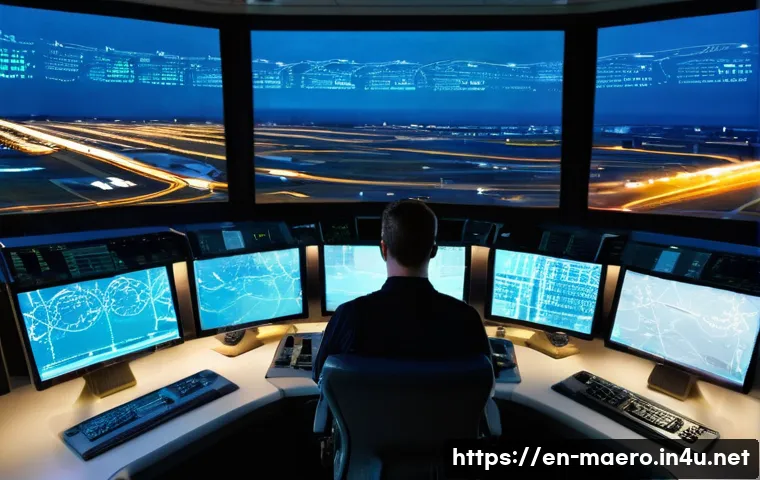
I remember the first time I visited an air traffic control tower. The sheer focus and intensity in that room were palpable. It was like watching a perfectly choreographed ballet, but with hundreds of incredibly expensive, fast-moving objects instead of dancers.
Air traffic controllers are the unsung heroes of the sky, guiding thousands of aircraft safely through complex airspace every single day. Their ability to communicate clearly, concisely, and instantaneously with pilots is absolutely paramount.
It’s not just about telling a plane where to go; it’s about anticipating potential conflicts, managing traffic flow, and responding to emergencies with split-second decisions.
I’ve always been amazed at how they can keep track of so many different flights, each with its unique trajectory and destination, all while maintaining a calm and authoritative demeanor.
It really puts into perspective the incredible responsibility they carry on their shoulders, ensuring that everyone from a small private jet to a massive commercial airliner stays on its designated path.
Guiding Giants: ATC’s Commands and Pilots’ Responses
The relationship between air traffic control and pilots is one of absolute trust and precision. Every instruction from ATC, whether it’s an altitude change, a heading adjustment, or a speed restriction, is a command that must be followed promptly and accurately.
Pilots, in turn, are trained to read back these instructions to ensure there are no misunderstandings. It’s a very specific language, full of technical terms and standardized phrases, designed to eliminate ambiguity.
I’ve heard recordings of these exchanges, and it’s fascinating how much information is conveyed in just a few short words. It’s not just about “turn left” or “climb to ten thousand feet”; it’s about ensuring that those simple commands are understood within the broader context of air traffic flow and safety protocols.
This constant, precise back-and-forth is the glue that holds the entire air transportation system together, preventing chaos and maintaining order in our crowded skies.
The Invisible Highways of the Air
Just like cars have lanes on the road, aircraft follow invisible “highways” in the sky, known as air routes or airways. Air traffic control is responsible for managing these routes, ensuring that aircraft maintain proper separation from each other, both horizontally and vertically.
This isn’t just about avoiding collisions; it’s about optimizing efficiency, minimizing delays, and getting people to their destinations on time. Controllers use advanced radar systems and communication tools to visualize the airspace and direct traffic.
From my perspective, it’s a colossal logistical puzzle that’s being solved in real-time, every second of every day. They’re constantly making adjustments, issuing new clearances, and rerouting aircraft around weather or other traffic.
The sophistication of these systems, combined with the human expertise, creates a seamless flow that, for most passengers, remains completely out of sight and out of mind, yet is absolutely critical.
Connecting the Cockpit: Inside the Flight Deck’s Comms
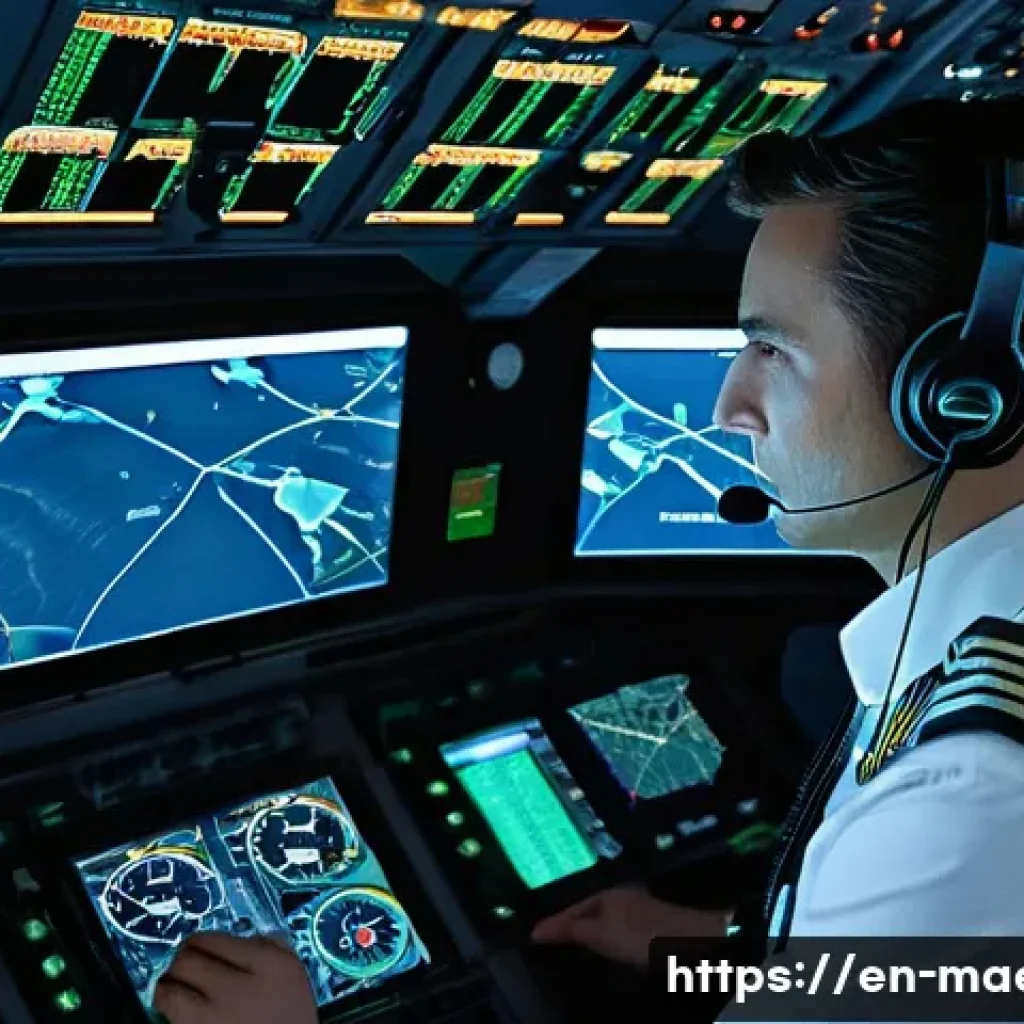
Stepping into a modern cockpit is like entering the ultimate command center, and at its heart are the communication systems. Pilots have an array of tools at their fingertips to talk to ground control, other aircraft, and even their own airline’s operations.
What I’ve learned is that it’s not just one system, but a sophisticated combination of different technologies, each serving a specific purpose. From short-range chatter around an airport to long-haul oceanic flights where terrestrial radio signals fade away, pilots need reliable communication, no matter where they are in the world.
I’ve always found it incredibly reassuring to know that even when you’re flying miles above the nearest landmass, the crew up front has multiple ways to stay connected and get help if they need it.
It’s a carefully designed redundancy that speaks volumes about the priority placed on safety in aviation.
VHF Radios: The Workhorses of Close-Range Comms
For most of the communication you hear around an airport or during a flight over land, pilots are using Very High Frequency (VHF) radios. These are the classic “roger that” radios, providing clear voice communication for air traffic control instructions, clearances, and general chatter with other aircraft in the vicinity.
I’ve always been fascinated by how robust and reliable these systems are. They’re straightforward, easy to use, and incredibly effective within their range.
Think of them as the walkie-talkies of the sky, but far more powerful and precisely tuned. While they might not have the global reach of satellite systems, their simplicity and effectiveness in busy airspace make them absolutely indispensable.
It’s like having a direct, open line to everyone who needs to know what’s going on around you, ensuring everyone stays coordinated and safe during critical phases of flight.
HF for the Long Haul: Oceanic Journeys
When an aircraft ventures far out over the ocean, beyond the range of land-based VHF stations, pilots switch to High Frequency (HF) radios. This is where things get a bit more complex, as HF signals can bounce off the ionosphere, allowing them to travel much further – literally across continents.
However, anyone who has ever used an old shortwave radio knows that HF can be subject to atmospheric interference, making the transmissions less clear than VHF.
I remember reading a pilot’s account of flying across the Atlantic where they described the sometimes-faint and echoing voices of ATC on HF, a stark contrast to the crisp audio of VHF.
Despite its quirks, HF has been a lifeline for oceanic flights for decades, providing the only means of real-time voice communication in vast, remote areas.
It’s a testament to its enduring utility, even as newer satellite technologies emerge.
Satellite Comms: Global Coverage and Data Streaming
This is the game-changer for modern aviation, in my opinion. Satellite communication systems provide truly global coverage, allowing for reliable voice and data links anywhere on Earth, even over the poles.
No more scratchy HF signals over the Atlantic; now, pilots can have crystal-clear voice communication and, more importantly, high-bandwidth data exchange.
This means real-time weather updates, digital clearances, and even in-flight internet for passengers are all possible. I’ve personally experienced the joy of browsing the web at 38,000 feet, and it’s all thanks to these incredible satellite networks.
For the cockpit, it translates into enhanced safety and efficiency, as pilots have constant access to the most up-to-date information, regardless of their position.
It’s a profound shift that is continuously evolving, bringing our flying experiences closer to our terrestrial ones.
Ground Links, Global Reach: Keeping Planes Connected Everywhere
It’s not just the pilots and air traffic controllers talking; there’s a whole network of ground-based systems that continuously communicate with aircraft, often without any human intervention.
This is where the true “smart” aspect of aviation really shines through. From the moment a plane pushes back from the gate until it lands at its destination, it’s constantly exchanging data with various ground stations and airline operations centers.
I’ve always found it fascinating how this invisible web of communication keeps track of every flight, every passenger, and every piece of baggage. It’s an incredibly complex logistical ballet that ensures everything stays on schedule and that any potential issues are identified and addressed long before they become bigger problems.
This seamless integration between air and ground is what truly defines modern air travel, turning what used to be isolated journeys into fully connected experiences.
ACARS: The Digital Messenger
ACARS, or Aircraft Communications Addressing and Reporting System, is a bit of an unsung hero in aviation, but it’s absolutely critical. This system allows for the digital exchange of short messages between aircraft and ground stations via VHF radio or satellite.
Think of it as the plane’s dedicated texting service. It automatically transmits information like “out of gate,” “off blocks,” “in air,” and “on blocks” (OOOI times), which are crucial for airline operations and flight tracking.
But it does so much more! It can send engine performance data, fuel status, and even requests for maintenance assistance before landing. I’ve heard stories from ground crew who could literally see a potential engine issue flagged by ACARS while the plane was still hours away, allowing them to have the necessary parts and technicians ready the moment it touched down.
That kind of predictive maintenance is a game-changer for efficiency and safety.
Air-to-Ground Data Links for Maintenance
Beyond ACARS, there are increasingly sophisticated data links that connect aircraft directly with their airline’s maintenance operations. This is where predictive analytics really comes into play.
Modern aircraft are equipped with hundreds, if not thousands, of sensors that continuously monitor every aspect of their performance. This data can be streamed to the ground in real-time, allowing engineers to spot trends, anticipate potential failures, and schedule maintenance proactively.
I’ve seen how this technology can prevent delays and improve safety by catching small issues before they become big ones. It means that when a plane lands, technicians aren’t just reacting to problems; they’re often already prepared with a precise plan of action, armed with data that was transmitted hours earlier.
It’s a testament to how connectivity is transforming every facet of air travel, making it smarter and more reliable.
Airline Operations Centers: The Brain Trust
At the heart of an airline’s ground-based communication strategy is its Operations Center. This is the nerve center where teams of dispatchers, meteorologists, and maintenance controllers monitor every single flight in their fleet, 24/7.
They’re constantly communicating with aircraft, air traffic control, and ground crews, making critical decisions about flight paths, fuel loads, and potential diversions.

I’ve always found these centers to be incredibly intense environments, a hub of focused activity. They receive the data from ACARS and other air-to-ground links, analyze it, and use it to keep the entire operation running smoothly.
It’s a prime example of how human expertise, combined with cutting-edge communication technology, ensures that the complex dance of airline operations unfolds without a hitch, ultimately getting passengers safely to their destinations.
When Things Go Wrong: Emergency Communication Protocols
While we all hope for smooth flights, the reality is that aviation demands preparedness for every conceivable scenario. That’s why emergency communication protocols are so rigorously developed and practiced.
It’s not just about a pilot yelling “Mayday!” into a microphone; it’s a structured, systematic approach to ensure that everyone who needs to know about an in-flight emergency is alerted swiftly and accurately.
The speed and clarity of communication in these critical moments can literally be the difference between life and death. I’ve always been incredibly impressed by the training that pilots and air traffic controllers undergo to handle these high-stress situations.
It’s a testament to the industry’s unwavering commitment to safety, ensuring that even in the face of the unexpected, the lines of communication remain open and effective.
Distress Calls: Mayday and Pan-Pan
These are the two most critical emergency calls in aviation, and every pilot knows them by heart. “Mayday” is reserved for situations of grave and imminent danger, where the aircraft or its occupants are in serious peril and require immediate assistance.
Think engine failure, fire, or a rapid decompression. The moment a pilot utters “Mayday, Mayday, Mayday” three times, it triggers an immediate and widespread response from air traffic control and rescue services.
“Pan-Pan,” on the other hand, is used for urgent situations where there is a serious problem but no immediate danger to life or the aircraft. This could be a medical emergency on board, a minor system malfunction, or a lost navigation capability.
While less critical than a Mayday, a Pan-Pan still signals a need for priority handling and assistance. These simple, yet powerful, phrases are universally understood and act as instant alerts, mobilizing an entire network of support.
Backup Systems: Ensuring Redundancy
One of the core tenets of aviation safety is redundancy, and communication systems are no exception. Aircraft are equipped with multiple, independent communication systems to ensure that a single failure doesn’t leave the crew isolated.
For instance, a plane might have several VHF radios, an HF radio, and satellite communication capabilities, all powered by different electrical buses.
I’ve always found this level of engineering foresight incredibly reassuring. It means that even if one system goes down, there are always backups, and often backups for the backups.
This robust layering of communication options provides pilots with the confidence that they will always be able to reach someone on the ground, no matter what challenges they encounter during a flight.
It’s a critical safety net that underscores the industry’s commitment to reliability and preparedness.
Training for the Unexpected
It’s one thing to have the systems, but it’s another to know how to use them effectively under extreme pressure. This is where extensive training comes in.
Pilots and air traffic controllers regularly undergo rigorous simulations and emergency drills to practice communication protocols for every conceivable scenario.
From engine fires to decompression, they learn to react calmly, clearly, and precisely. I’ve spoken to pilots who describe these training sessions as incredibly intense, designed to build muscle memory and ensure that the correct procedures become second nature.
It’s not just about memorizing checklists; it’s about developing the presence of mind to assess a rapidly evolving situation and communicate the critical information needed to resolve it safely.
This continuous training is what ultimately transforms complex technology into a reliable lifeline during an emergency.
The Future is Now: Next-Gen Aviation Communication
The pace of technological change never ceases to amaze me, and aviation communication is no exception. We’re constantly seeing innovations that promise to make flying even safer, more efficient, and more connected.
It’s not just about faster internet for passengers; it’s about building a truly integrated global airspace where every aircraft is a node in a vast, intelligent network.
I honestly get excited thinking about the possibilities – from enhanced real-time weather avoidance to completely autonomous data exchange with air traffic control.
It’s a future where communication is so seamless and intelligent that it almost becomes invisible, working tirelessly in the background to optimize every aspect of a flight.
This isn’t science fiction; it’s the direction we’re heading, driven by a relentless pursuit of perfection in the skies.
The Promise of Satellites and Data Links
The continued expansion and evolution of satellite communication systems are at the forefront of this next generation. We’re moving towards constellations of low-earth orbit (LEO) satellites that offer incredibly high bandwidth and low latency, revolutionizing how aircraft connect globally.
This means even more robust data links, allowing for richer information exchange between air and ground. Imagine real-time 4K video feeds from an aircraft for maintenance analysis, or even more precise tracking data for air traffic control.
I envision a future where delays caused by outdated information become a thing of the past because every piece of data is instantly available. These advanced satellite networks are not just about making communication better; they’re about unlocking entirely new capabilities for how we manage and experience air travel.
Moving Towards Digital Voice and IP
While analog VHF radios have served us well for decades, the industry is gradually transitioning towards more digital, IP-based communication platforms.
This shift brings numerous advantages, including clearer voice quality, more efficient use of radio spectrum, and enhanced security. Imagine having the clarity of a modern VoIP call, even when you’re thousands of feet in the air.
This also opens the door for more sophisticated applications, integrating voice and data seamlessly. I anticipate that this move will streamline operations significantly, making communication between pilots and ground services even more precise and reliable.
It’s a natural progression, leveraging the power of digital networks to enhance a fundamental aspect of flight operations.
Enhancing Security and Efficiency
As communication systems become more interconnected and digital, the focus on cybersecurity becomes paramount. Protecting these vital links from potential threats is a top priority for the industry.
Simultaneously, these advancements are driving incredible gains in efficiency. By automating routine data exchanges and providing real-time information, aircraft can operate more optimally, reducing fuel burn and minimizing delays.
I’ve always believed that technology should make our lives easier and safer, and in aviation, this philosophy is at the core of every new communication innovation.
The future promises a truly hyper-connected airspace where every component works in harmony, leading to an even safer and more seamless flying experience for everyone.
Maintaining the Link: Challenges and Innovations
Even with all the incredible advancements, maintaining robust aircraft communication systems is an ongoing challenge. The skies are a dynamic environment, constantly presenting obstacles that demand innovative solutions.
From battling atmospheric interference to fending off sophisticated cyber threats, it’s a never-ending battle to ensure those critical links remain unbroken.
What I’ve personally found fascinating is how this constant pressure to overcome challenges pushes engineers and researchers to think outside the box, leading to breakthroughs that benefit not just aviation but often other industries as well.
It’s a reminder that even the most advanced technology requires continuous vigilance and adaptation to stay ahead of the curve. This commitment to overcoming hurdles is what truly sets aviation apart.
Battling Interference and Weather
Anyone who’s ever tried to get a good radio signal during a thunderstorm knows that nature can be a formidable opponent. Aircraft communication systems face similar, but far more complex, challenges.
Atmospheric conditions, solar flares, and even man-made interference can all impact the clarity and reliability of radio signals. Engineers are constantly developing new modulation techniques, advanced filtering, and redundant pathways to mitigate these effects.
I recall a flight where we hit some serious turbulence, and while the physical ride was bumpy, the communication with ATC remained clear, a testament to the resilience of these systems.
It’s a continuous cat-and-mouse game, where every improvement in communication technology is designed to overcome the next environmental hurdle thrown its way.
Cybersecurity in the Skies
As aviation communication moves towards more digital and IP-based networks, cybersecurity has emerged as a critical concern. Protecting these systems from unauthorized access, data breaches, and potential disruptions is paramount.
Just like our personal devices and bank accounts, aircraft systems need robust defenses. This involves intricate encryption, secure protocols, and constant monitoring to detect and thwart any malicious activity.
I’ve learned that the aviation industry takes this incredibly seriously, investing heavily in security measures to safeguard against what could be catastrophic consequences.
It’s a complex and evolving threat landscape, requiring continuous innovation and collaboration between airlines, manufacturers, and government agencies to keep the skies secure.
The Constant Upgrade Cycle
What truly defines modern aircraft communication is its constant state of evolution. It’s not a static technology; it’s a living system that is continuously being refined, updated, and improved.
Every few years, new standards emerge, better hardware is developed, and more sophisticated software is implemented. This upgrade cycle is driven by the dual goals of enhancing safety and improving efficiency.
Airlines invest significant capital in ensuring their fleets are equipped with the latest communication technologies, recognizing that these advancements are crucial for competitive advantage and operational excellence.
I find it inspiring to witness this continuous commitment to progress, knowing that the systems keeping our flights connected today are even better than those of yesterday, and will be further improved tomorrow.
| Communication System Type | Primary Use Case | Key Advantage | Example Service |
|---|---|---|---|
| VHF Radio | Short-range voice communication with ATC and other aircraft | Clear, reliable voice communication in congested airspace | Local airport control tower communications |
| HF Radio | Long-range voice communication, especially over oceans | Global reach without ground infrastructure (atmospheric bounce) | Trans-oceanic ATC contact |
| Satellite Communication (SatCom) | Global voice and high-bandwidth data, passenger internet | Truly global coverage, high data rates, secure links | In-flight Wi-Fi, FANS (Future Air Navigation System) |
| ACARS (Aircraft Communications Addressing and Reporting System) | Digital data link for operational messages, OOOI times, engine data | Automated, efficient exchange of critical operational data | Automated “off blocks” message to airline operations |
| Air-to-Ground Data Links | Real-time streaming of aircraft health and performance data to maintenance | Predictive maintenance, proactive issue resolution | Engine health monitoring transmitted to ground engineers |
Wrapping Things Up
Whew! We’ve covered a lot of ground, or should I say, sky, today! It’s truly incredible to think about the complex web of communication that underpins every single flight, from the simplest local hop to a transcontinental journey. What started as simple radio chatter has evolved into a sophisticated digital ballet, ensuring safety, efficiency, and connecting us all in ways early aviators could only dream of. For me, personally, understanding these layers of communication makes every flight feel like an even greater marvel of human ingenuity and teamwork. It’s not just about the pilots; it’s about the silent digital guardians, the vigilant air traffic controllers, and the continuous innovation that keeps us soaring higher and safer every day.
Useful Info You’ll Want to Bookmark
1. Ever wondered what those pilots are actually saying? You can totally tune in! Many online platforms and even some apps, like LiveATC.net, let you listen to live air traffic control communications from airports around the globe. It’s a fantastic way to demystify the language of the skies and get a real-time feel for the organized chaos of air travel.
2. Aviation communication isn’t just voice! A massive amount of essential flight information, like flight plans, weather updates, and even engine diagnostics, is exchanged digitally. Systems like ACARS (Aircraft Communications Addressing and Reporting System) are the unsung heroes, silently sending data to ensure everything is running smoothly.
3. Pilots and air traffic controllers use very specific “phraseology” – a standardized set of words and phrases designed to prevent misunderstandings. Learning a few key terms, like “Roger” (I have received all your last transmission) or “Wilco” (I understand your message and will comply), can make listening to ATC even more engaging.
4. The future of aviation communication is rapidly moving towards even more digital and satellite-based systems. We’re talking about high-bandwidth data links, digital voice, and integrated IP networks that will further enhance safety, efficiency, and provide seamless global connectivity, even offering a real-time 4K video for maintenance analysis.
5. Cybersecurity is becoming a HUGE deal in aviation communication. As more systems become digital and interconnected, protecting these vital links from cyberattacks is a top priority. It’s a constant battle to secure navigation and communication channels against evolving threats, requiring continuous investment and vigilance from the industry.
Key Takeaways
Modern aircraft communication is a marvel of technology and human coordination. It’s far more than just pilots talking on the radio; it’s an intricate, redundant network of digital data links, satellite systems, and precise verbal exchanges. This multi-layered approach, backed by rigorous training and continuous innovation, ensures the highest levels of safety and efficiency in our skies. As we look ahead, the integration of AI, advanced data analytics, and robust cybersecurity measures will continue to redefine how aircraft stay connected, making air travel even smarter and more reliable. This constant evolution is what truly keeps our aviation world moving forward, safely and efficiently, 24/7.
Frequently Asked Questions (FAQ) 📖
Q: How do pilots actually talk to air traffic controllers when they’re flying high above us? It seems so complicated!
A: Oh, this is one of those things that really blows my mind! When you hear about pilots chatting with Air Traffic Control (ATC), it’s mostly happening through very high frequency, or VHF, radio.
Think of it like a souped-up walkie-talkie system, but way more sophisticated and, of course, absolutely critical. When I imagine a pilot making that initial call to a new sector, it’s just amazing how clear and concise they have to be.
VHF is fantastic because it provides crystal-clear audio, which is crucial for safety. The catch is that it’s “line-of-sight,” meaning the aircraft needs to be able to directly “see” the ground station or another aircraft for the signal to work.
That’s why you sometimes hear about aircraft switching frequencies as they fly across different regions, handing off from one controller to the next. It’s a seamless ballet of communication that keeps things running smoothly and, most importantly, keeps everyone safe.
It truly is a testament to human ingenuity and precise protocols, isn’t it?
Q: Beyond just talking on the radio, do planes have other ways to communicate important information?
A: Absolutely! This is where things get really fascinating and show just how advanced aviation technology is. While voice communication via VHF is essential, it’s far from the only game in town.
Modern aircraft are like incredibly smart flying data centers! They use systems like ACARS (Aircraft Communications Addressing and Reporting System) to send and receive digital data messages.
Imagine getting weather updates, operational changes, flight plan amendments, or even maintenance reports sent automatically from the plane to the ground, or vice versa.
It’s not just pilots talking; it’s the aircraft itself communicating vital info in the blink of an eye. And for flights over oceans or remote areas where VHF can’t reach, they tap into satellite communication (Satcom).
I remember learning about this and thinking, wow, that’s next-level! Satcom provides a reliable link for both voice and data across vast distances, truly connecting our world.
It’s like having a secure, global internet connection for an airplane, ensuring constant awareness and control no matter where a plane is.
Q: What happens if a plane loses its communication systems? Is there a backup, and how do they ensure safety?
A: That’s a fantastic question, and one I think about often, especially knowing how much we rely on technology! The great news is that aviation safety protocols are designed with multiple layers of redundancy, specifically to address such scenarios.
It’s not just one radio or one system; planes carry several independent communication systems. For instance, they’ll have multiple VHF radios. If they’re flying long-haul, they also have High Frequency (HF) radios, which, while not as clear as VHF, can transmit over much greater distances by bouncing signals off the ionosphere – a real lifesaver over oceans!
There are also satellite communication systems as backups. Pilots are rigorously trained for communication failure procedures, too. If they lose contact, they have specific actions to take, like squawking a particular code on their transponder (7600 for “loss of communications”) which immediately alerts air traffic controllers that something is amiss.
It’s like a silent alarm system. What I’ve personally gathered from talking with folks in the industry is that the emphasis on safety is paramount, and these systems are incredibly robust, with multiple failsafes built in.
So, rest assured, they’ve truly thought of everything to keep us safe!